


一、Material Overview & Concept Positioning
1.1 Definition & Core Classification (QStE Series and HC/LA Series)
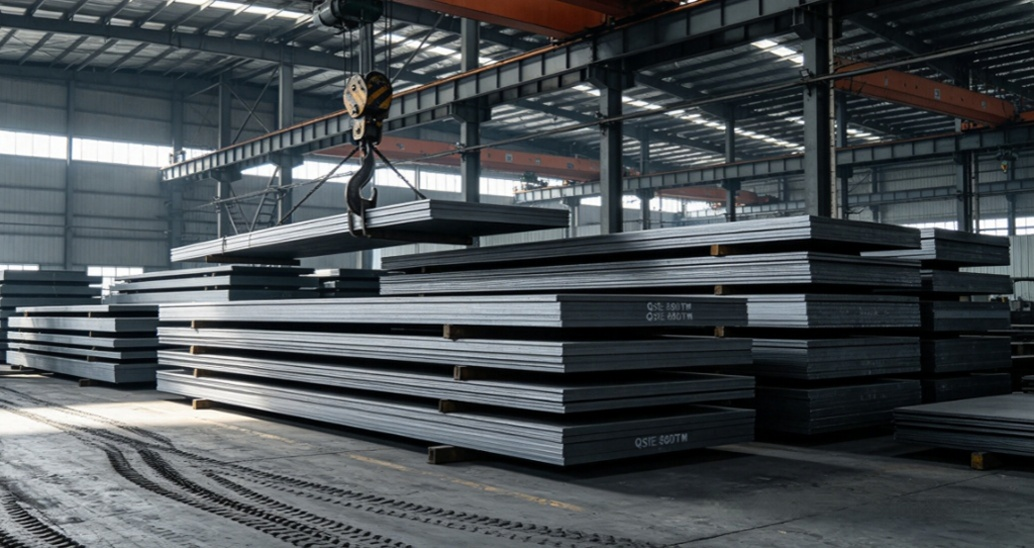
QStE and HC/LA series grades are the most widely used Low Alloy High Strength Steels (LAHS Steel) for current automotive lightweighting.
Their biggest difference from previously mentioned "quality alloy structural steels" such as 40Cr and 16MnCr5 lies in: these steel sheets achieve high strength mainly via microalloying (Nb, Ti, V) and Thermo-Mechanical Controlled Processing (TMCP), instead of post-final heat treatment.
Accordingly, they inherently deliver excellent cold formability, making them highly suitable for manufacturing complex body structural components through stamping, roll forming and other processes.
These two steel families are collectively referred to as High-Strength Low-Alloy Steels (HSLA) for cold forming. They represent the dominant lightweight base material in the global automotive industry, accounting for 40%–60% of steel consumption in BIWs (Body-in-White).
Their core technical route consists of low carbon design + microalloying (Nb/Ti/V) + TMCP. High mechanical strength is realized by grain refinement and precipitation strengthening. The materials meet target performance as-produced, and can be directly stamped without subsequent heat treatment, striking an optimal balance among strength, formability and cost.
|
Series |
Product Form |
Main Supply Thickness |
Core Advantages |
Vehicle Application Positioning |
|
QStE Series |
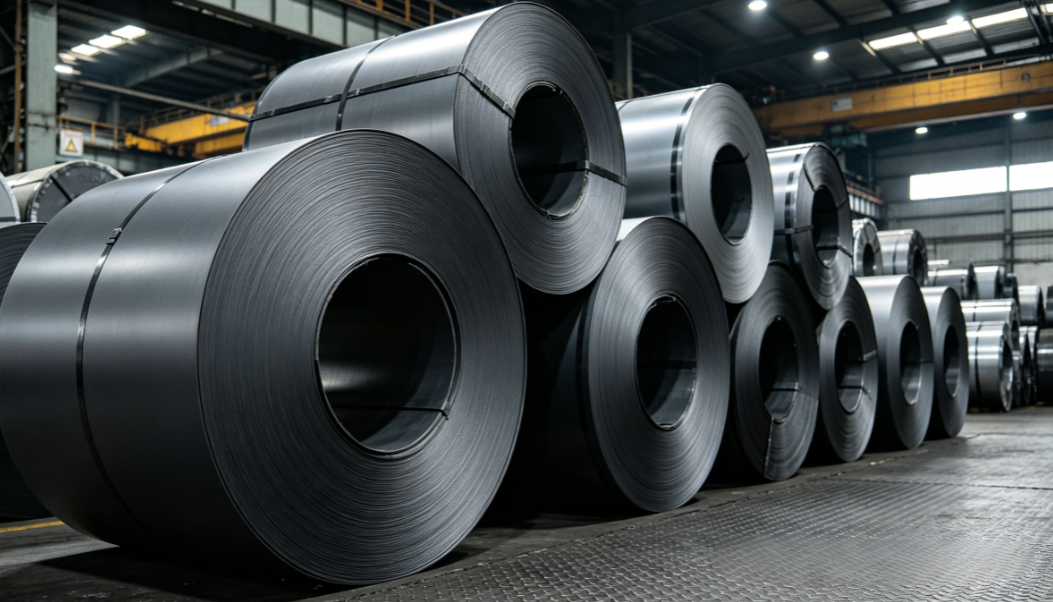
Hot Rolled Pickled Sheet |
2.0-8.0mm(Upper Limit 1.5-12mm) |
High strength, excellent through-thickness (Z-direction) performance, superior weldability for heavy gauge sheets |
Automotive "skeleton": chassis, frame and load-bearing structures |
|
HC/LA Series |
Cold Rolled Annealed Sheet |
0.6-2.0mm(Upper Limit 0.5-2.5mm) |
Premium surface quality, high dimensional accuracy, excellent deep drawability |
Automotive "skin": body-in-white, inner & outer panels, reinforcements |
|
HC/LAD+Z Series |
Hot-Dip Galvanized Cold Rolled Sheet |
0.6-2.0mm |
Sacrificial anode anti-corrosion performance, outstanding coating adhesion |
Corrosion protection component: body cavities, floor panels, exterior exposed parts |
1.2 Material Number Naming Rules
• QStE series (Standard: EN 10149-2, Q/BQB 310, GB/T 20887.1)
• Q: Cold forming steel; St: Structural steel; E: Hot rolled
• Numbers: Minimum yield strength (MPa)
• TM: Hot mechanical rolling (TMCP) process
• HC/LA series (Standard: EN 10268, Q/BQB 410, GB/T 20887.2)
• HC: Cold rolled; LA: Low alloy high strength
• Numbers: Minimum yield strength (MPa)
• D: Deep drawing grade; +Z: Hot galvanizing (GI); +ZF: Zinc-iron alloy coating (GA)
1.3 The Essential Difference from Traditional Alloy Structural Steels
This is a point that many engineers tend to confuse. The core difference lies in the reinforcement mechanism:
|
Comparison Item |
QStE/HC-LA Series |
Quality alloy structural steels such as 40Cr / 16MnCr5 |
|
Strengthening Mechanism |
Grain refinement strengthening + precipitation strengthening (TMCP process) |
Solid-solution strengthening + phase transformation strengthening (quenching & tempering) |
|
Post Production Heat Treatment |
Not required |
Mandatory quenching & tempering / carburizing quenching |
|
Carbon Content |
≤0.12%(ultra-low carbon) |
0.15–0.45% (medium carbon) |
|
Cold Formability |
Excellent (elongation ≥15%) |
Poor (hot forming required) |
|
Weldability |
Outstanding (direct spot welding available) |
Moderate / inferior (prone to cracking) |
|
Weldability |
Low |
High (including heat treatment expenses) |
二、In-depth Analysis of Core Performance Indicators
2.1 Chemical Composition and Microstructure
Typical Melting Composition (wt%)
|
Element |
Control Range |
Core Function |
|
C |
≤0.12 |
Guarantees weldability and formability; excessive content drastically reduces toughness |
|
Mn |
0.8-1.8 |
Solid-solution strengthening, improves strength and hardenability |
|
Si |
≤0.5 |
Deoxidizer; minor addition enhances strength |
|
Nb |
≤0.09 |
Refines grains, strengthens via precipitation of nano-sized NbC precipitates |
|
Ti |
≤0.15 |
Binds free nitrogen, refines grains, strengthens via TiC precipitation |
|
Al |
≥0.01 |
Deoxidizes and refines austenite grains |
|
P |
≤0.03 |
Harmful impurity, deteriorates low-temperature toughness |
Microstructure
• QStE Series: Ferrite + 5%-15% Pearlite, high strength grade (≥500 MPa) with a small amount of Bainite, grain size 5-10 μm
• HC/LA Series: Ferrite + ≤5% Pearlite, high strength grade with a very small amount of Bainite, grain size 3-8 μm
• No martensite structure, thus possessing excellent cold formability and low-temperature toughness
2.2 General Physical Properties
• Density: 7850 kg/m³
• Elastic modulus E: 210 GPa
• Poisson's ratio ν: 0.3
• Linear expansion coefficient: 11.5×10⁻⁶ /℃ (20-100℃)
• Thermal conductivity: 50 W/(m・K)
• Melting point: 1520-1530℃
• Long-term operating temperature: ≤200℃
• Heat distortion temperature: approximately 500-600℃
2.3 Full Parameter Table of Mechanical Properties (including yield-to-strength ratio)
Note: All properties are the results of longitudinal tensile tests at room temperature, A80 is the elongation at a gauge length of 80mm
|
Steel Grade |
Yield Strength Re (MPa) |
Tensile Strength Rm (MPa) |
Elongation A80 (%) |
Yield-to-Tensile Ratio Re/Rm |
Work Hardening Exponent n |
Plastic Strain Ratio r |
Hole Expansion Ratio HER (%) |
|
QStE340TM |
≥340 |
410-540 |
≥24 |
0.63-0.70 |
0.18-0.21 |
0.8-1.1 |
70-90 |
|
QStE380TM |
≥380 |
440-580 |
≥22 |
0.66-0.72 |
0.17-0.20 |
0.8-1.1 |
65-85 |
|
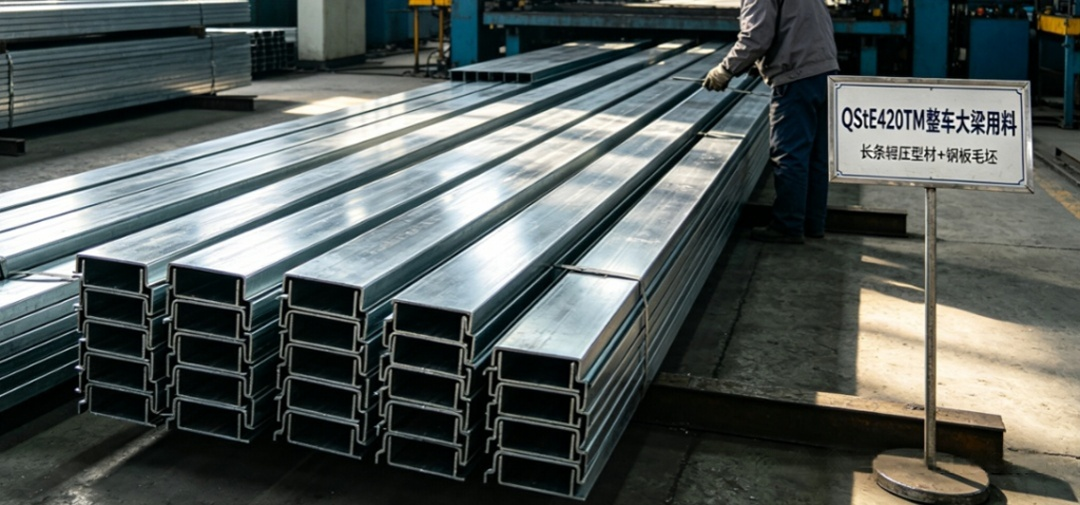
QStE420TM |
≥420 |
480-620 |
≥21 |
0.68-0.75 |
0.16-0.19 |
0.8-1.2 |
60-80 |
|
QStE460TM |
≥460 |
550-720 |
≥19 |
0.68-0.75 |
0.15-0.18 |
0.9-1.3 |
55-75 |
|
QStE500TM |
≥500 |
600-780 |
≥17 |
0.64-0.70 |
0.14-0.17 |
0.9-1.3 |
50-70 |
|
QStE550TM |
≥550 |
640-820 |
≥15 |
0.67-0.73 |
0.13-0.16 |
0.9-1.3 |
45-65 |
|
HC260LA |
260-330 |
350-430 |
≥31 |
0.60-0.67 |
0.20-0.24 |
1.4-2.0 |
90-120 |
|
HC300LA |
300-380 |
380-480 |
≥26 |
0.63-0.70 |
0.19-0.22 |
1.3-1.8 |
85-110 |
|
HC340LA |
340-420 |
410-510 |
≥23 |
0.67-0.74 |
0.18-0.22 |
1.2-1.8 |
80-100 |
|
HC380LA |
380-480 |
450-580 |
≥21 |
0.69-0.76 |
0.17-0.20 |
1.1-1.6 |
75-95 |
|
HC420LA |
420-520 |
480-620 |
≥19 |
0.70-0.77 |
0.16-0.19 |
1.0-1.5 |
70-90 |
|
HC500LA |
500-630 |
550-720 |
≥16 |
0.70-0.78 |
0.12-0.15 |
0.8-1.2 |
60-80 |
Key Performance Indicators Interpretation (Must-Know for Engineers)
1. Yield-to-Resistance Ratio (Re/Rm):
○ Meaning: Reflects the plastic reserve and overload resistance capacity of the material
○ Rule: The higher the strength, the higher the yield-to-resistance ratio; for the same strength, the HC series is slightly lower than the QStE series
○ Application: Yield-to-resistance ratio < 0.7 → Good formability and strong torsional resistance; Yield-to-resistance ratio > 0.75 → Greater rebound, higher forming difficulty
2. Hardening Index (n value):
○ Meaning: Reflects the strain hardening ability of the material; the higher the n value, the more uniform the deformation
○ Typical: The n value of HC260LA is the highest (0.22), suitable for complex deep drawing parts; the n value of QStE550TM is the lowest (0.14), suitable for simple rolling
3. Thickness Anisotropy Coefficient (r value):
○ Meaning: Reflects the deformation resistance of the material in the thickness direction; the larger the r value, the less prone to thinning cracking
○ Typical: The r value of the HC series (1.2-2.0) is significantly higher than that of the QStE series (0.8-1.3)
4. Expansion Rate (HER):
○ Meaning: Reflects the edge forming ability of the material, directly determining the success or failure of the bending and expansion processes
○ Rule: The higher the strength, the lower the expansion rate; for the same strength, the HC series is superior to the QStE series
2.4 Environment and Chemical Properties
• Corrosion Resistance:
○ Bare plate: The atmospheric corrosion rate is approximately 0.1 - 0.2 mm per year. It must be coated for protection.
○ Hot-dip galvanized plate (LAD + Z): The zinc layer thickness is 80 - 120 g/m², which enhances corrosion resistance by 5 - 8 times.
• Weather Resistance:
○ After coating, it can meet the requirements for vehicle use for over 10 years.
○ Solvent Resistance: Good. It can withstand common automotive media such as gasoline, engine oil, and antifreeze.
三、Full Process of Manufacturing and Processing
3.1 Core Production Processes
1. QStE Series (Hot Rolling and Acid Washing):
○ Converter steelmaking + LF/RH refining → Thin Strip Continuous Casting → TMCP Hot Mechanical Rolling (Final Rolling Temperature 850-900°C, Coil Temperature 500-650°C) → Hydrochloric Acid Washing → Finished Product
○ Key points: Obtain fine ferrite grains and dispersed precipitates through controlled rolling and cooling
2. HC/LA Series (Cold Rolling and Annealing):
○ Hot Acid-Washed Plate → Cold Rolling (Reduction Rate 60-80%) → Continuous Annealing (780-850°C for 30-120 seconds) → Straightening → Finished Product
○ Key points: Control the recrystallization grain size during continuous annealing to ensure formability
3. Hot Dipping Galvanizing (LAD + Z):
○ After continuous annealing, directly enter the zinc pot for hot dip galvanizing to form a pure zinc coating, providing sacrificial anode protection
3.2 Key Points of Joining Processes
Spot Welding (Most Commonly Used in the Automotive Industry)
• Parameter Range: Current 8-15 kA, Pressure 2-5 kN, Time 0.2-0.5 s
• Precautions:
○ The heat-affected zone (HAZ) may show mild softening (strength decreases by 5-10%), with a softening zone width of approximately 1-2 mm, which is a normal phenomenon
○ Spot welding of galvanized plates requires an appropriate increase in current and pressure to prevent zinc layer spattering
○ It is recommended to use medium-frequency inverter spot welding machines
Laser Welding
• Advantages: Fast welding speed, small heat-affected zone, and small deformation
• Applicable: Body assembly panels, door ring structures
• Precautions: Assembly gap should be ≤ 0.1 mm, and argon gas protection is required
MIG/MAG Welding
• Applicable: Chassis beams, frames, etc., for thick plate welding
• Weld Wire: ER50-6
• Precautions: Control the welding heat input to prevent coarse grain formation
3.3 Key Points of Pressing and Forming Processes
1. Springback Control:
○ High-strength steel springback is the biggest pain point. The springback of QStE500TM/QStE550TM is 2-3 times that of ordinary low-carbon steel
○ Solution: Reverse compensation of mold surface, increase clamping force, optimize design of stretch ribs
2. Prevention of Shear Edge Cracking:
○ Reason: After trimming, the edge generates work hardening and micro-cracks, causing cracking during hole expansion / flanging
○ Solution: Trim gap should be controlled at 10-15% of the plate thickness, use rounded edge trimming, and increase flanging radius
3. Wrinkle Control:
○ Reason: Insufficient clamping force or uneven material flow
○ Solution: Increase clamping force, optimize layout of stretch ribs
四、 Industrial and Automotive Full-vehicle Practical Applications
4.1 QStE Series (Hot-Rolled Acid-Washed Sheet) - Chassis and Commercial Vehicle Core Components
|
Grade |
Typical Application Scenarios |
Design Key Points |
|
QStE340TM |
Truck cargo floor, fairing brackets, passenger vehicle subframe cross members |
Shallow drawing, simple bending forming |
|
QStE380TM |
Light-duty truck longitudinal beams, inner door anti-collision beams, construction machinery supports |
Medium-complex cold roll forming |
|
QStE420TM |
Heavy-duty truck frame longitudinal beams, construction machinery chassis cross members, excavator track frames |
High torsional resistance requirement, welded structure |
|
QStE460TM |
Main chassis of heavy-duty trucks (tractor main rails), passenger vehicle front longitudinal beams |
High load-bearing capacity, heavy-gauge welded construction |
|
QStE500TM |
New energy vehicle battery pack lower housing frames, special vehicle skeletons |
Lightweight design with high rigidity |
|
QStE550TM |
Crane booms, aerial work platform arm frames, ultra-high strength roll-formed profiles |
Extreme cold forming with severe springback |
4.2 HC/LA Series (Cold-Rolled Steel Sheets) - Main Component of the Body-in-White
|
Grade |
Typical Application Scenarios |
Design Key Points |
|
HC260LA |
Outer door panels, fenders, tailgate inner panels |
Complex deep drawing geometry |
|
HC300LA |
Hood inner panels, sunroof reinforcement rings, seat structural components |
Shallow drawing with strict requirements on surface quality |
|
HC340LA/B340LA |
King of BIW structural parts: A/B pillar inner panels, sill reinforcements, door anti-collision beams, seat slide rails |
Balanced comprehensive performance, the most widely applied grade |
|
HC380LA |
Door hinge reinforcements, instrument panel crossmember brackets, suspension tower mounts |
Local high load-bearing requirements |
|
HC420LA |
B-pillar inner & outer panels, roof longitudinal beams, door ring structural components |
High crash energy absorption performance |
|
HC500LA |
Bumper frames, door anti-collision bars, sill beams |
Ultra-high strength with strict crash resistance requirements |
4.3 HC/LAD+Z Series (Hot-Dip Galvanized Sheet) - Specialized for Corrosion Prevention
|
Grade |
Typical Application Scenarios |
|
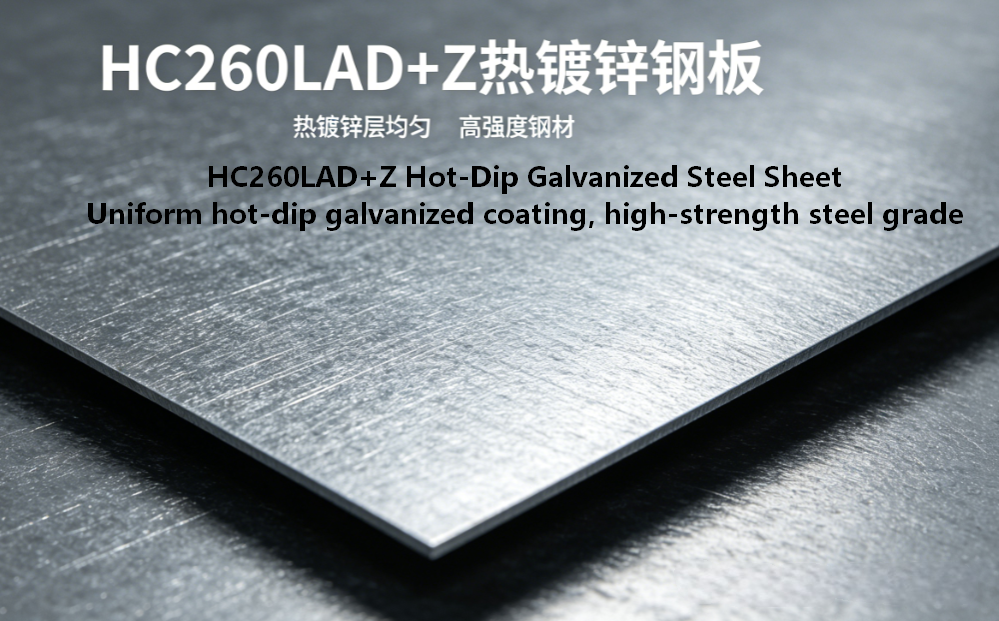
HC260LAD+Z |
Inner panels of sedan doors, fuel tank covers, trunk lid inner panels |
|
HC300LAD+Z |
Hood inner panels, inner reinforcements for body side frames |
|
HC340LAD+Z |
Body sill inner panels, floor cross members, battery pack upper housings |
4.4 Latest Application Trends
• New Energy Vehicles: The lower shell of the battery pack extensively uses QStE500TM/QStE550TM, which can reduce weight by 15-25% compared to traditional low-carbon steel.
• Integrated Body: The door ring structure adopts HC420LA/HC500LA laser spot welding, reducing the number of parts by more than 30%.
• Ultra-High Strength: QStE600TM and HC600LA have begun small-scale applications, further enhancing the lightweighting effect.
五、 CAE Simulation Application
5.1 Material Model Selection (LS-DYNA)
|
Simulation Type |
Recommended Constitutive Model |
Keyword |
Applicable Scenarios |
|
Crash Safety |
Strain-rate dependent elastoplastic model |
*MAT_24 (Piecewise Linear Plasticity) |
General crash simulations with high computing efficiency |
|
Fatigue Durability |
Elastoplastic |
*MAT_24 + *FATIGUE |
Stress/strain-based fatigue analysis |
5.2 Key Simulation Input Parameters
General Parameters
• Density: 7850 kg/m³
• Elastic modulus: 210 GPa
• Poisson's ratio: 0.3
Cowper-Symonds strain rate parameters
|
Series |
C(s⁻¹) |
P |
|
QStE Series |
40 |
5 |
|
HC Series |
45 |
5 |
At a strain rate of 1000s⁻¹, the yield strength of HC340LA is approximately 1.3-1.4 times that of the static load, which is 440-480 MPa.
5.3 Common Misconceptions in Simulation and Corrections
1. Do not use engineering stress-strain curves: The real curves obtained from tensile tests must be input; otherwise, the results in the high-strain zone will be severely distorted.
2. The rebound simulation must use implicit solvers: Explicit solvers may have rebound errors of over 30%.
3. Edge cracking cannot be determined only by the FLD criterion: The CrachFEM or GISSMO model must be introduced, and the expansion rate test data must be input.
4. Welding joints cannot be simply connected at nodes: Spot welding uses *CONSTRAINED_SPOTWELD, and laser welding uses shell element to simulate the weld.
六、Failure Modes and Reliability Analysis
6.1 Pressing Failure
• Springback: The most common failure, resulting in dimensional deviations of the parts
○ Solution: Reverse compensation of the mold surface, increase the clamping force
• Shear edge cracking: Cracking at the edge during flanging or reaming
○ Solution: Optimize the trimming process, increase the flanging radius
• Wrinkling: Caused by uneven material flow
○ Solution: Increase the clamping force, optimize the design of the stretch ribs
6.2 Collision Failure
• Ductile fracture: Tensile fracture in high stress areas
○ Simulation: Use the GISSMO model, consider the influence of stress triaxiality
• Shear fracture: Fracture dominated by shear stress
○ Simulation: Consider the influence of the Lode angle
• Welding joint failure: Cracking at the weld point or weld seam
○ Simulation: Use an accurate welding model, consider welding defects
6.3 Service Failure
• Fatigue failure: Cracking caused by alternating loads
○ Causes: Stress concentration, welding defects
○ Solution: Optimize the structural design, reduce stress concentration
• Corrosion failure: Decrease in strength due to environmental corrosion
○ Solution: Use hot-dip galvanized sheet, optimize the coating process
七、Comparison of Domestic and Foreign Standards and Designations
|
Baosteel (China) |
EN Standard (Europe) |
JIS Standard (Japan) |
|
QStE340TM |
S340MC |
SPFC340 |
|
QStE420TM |
S420MC |
SPFC420 |
|
QStE500TM |
S500MC |
SPFC500 |
|
HC260LA |
HC260LA |
SPFC260 |
|
HC340LA |
HC340LA |
SPFC340 |
|
HC420LA |
HC420LA |
SPFC420 |
八、Summary and Selection Suggestions
1. QStE Series: Suitable for chassis, frame and battery pack structural components with a thickness of ≥ 2mm, high strength requirements, and low complexity in forming.
2. HC/LA Series: Suitable for inner and outer panels and strengthening components of the white body with a thickness of < 2mm, high surface quality requirements, and high complexity in forming.
3. LAD+Z Series: Suitable for the inner cavities, base plates, and exposed parts of the vehicle body with high anti-corrosion requirements.
4. Strength Selection: Under the premise of meeting performance requirements, preferentially choose low-strength grades to reduce forming difficulty and cost.


