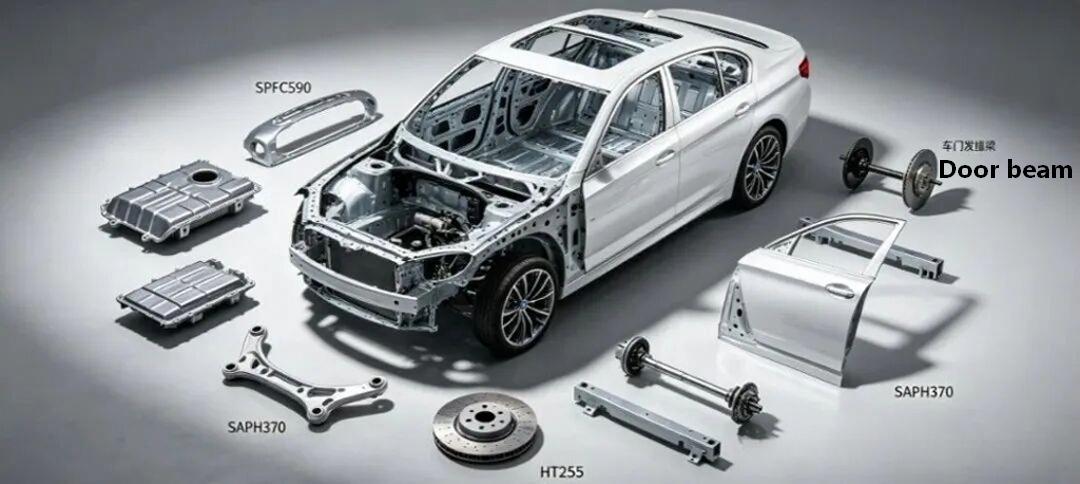
The first principle in selecting materials for automobiles has never been "pushing for the maximum performance limit", but rather achieving the optimal comprehensive cost across the entire process based on the requirements of the working conditions. The several major categories of materials we are discussing today (low-carbon mild steel SP series / structural high-strength SAPH series / forming high-strength SPFC series / gray cast iron HT series) precisely constitute the basic framework of the metal usage in mass-produced automobiles, and form the "maximum common denominator material library" that aligns the entire R&D - process - supply chain chain.
Low carbon steel series (Low carbon steel): SPCC/SPCD/SPCE/SPHC/SPHD/SPHE; Excellent forming steel series (Excellent forming steel): SPFC440/590/980; Steel for high quality carbon structure steel series (Steel for high quality carbon structure steel): SAPH310/370/400/440; Carbon steel castings steels series (Carbon steel castings steels): HT150/HT250, etc.
1. Cold-rolled carbon steel sheets and strips (SPCC/SPCD/SPCE)
Conceptual attribute
• Definition: The cold-rolled low-carbon carbon steel sheet and strip defined by the Japanese Industrial Standard JIS G 3141 are suitable for general processing, stamping, and deep drawing applications.
• Naming rule: S (Steel) + P (Plate) + C (Cold) + Pressing grade letter
• Corresponding brand name:
•SPCC: Ordinary grade, corresponding to national standard GB/T 13237 Q195-Q215A, European Union EN 10130 DC01, and German St12
•SPCD: Pressing grade, corresponding to national standard GB/T 13237 08Al, EU DC03, and German St13
•SPCE: Deep Drawing Grade, corresponding to national standard GB/T 5213 for 08Al deep drawing steel, EU standard DC04, and German standard St14
2. Physical Chemistry and Mechanical Properties
Chemical composition (melting analysis, %, JIS standard upper limit)
|
Grade |
C |
Si |
Mn |
P |
S |
Alt |
|
SPCC |
≤0.15 |
≤0.05 |
≤0.60 |
≤0.035 |
≤0.025 |
- |
|
SPCD |
≤0.10 |
≤0.03 |
≤0.45 |
≤0.030 |
≤0.020 |
≥0.020 |
|
SPCE |
≤0.08 |
≤0.03 |
≤0.40 |
≤0.025 |
≤0.020 |
≥0.025 |
Mechanical properties (annealed state, standard minimum / typical value)
|
Grade |
Yield Strength (MPa) |
Tensile Strength (MPa) |
Typical Yield-to-Tensile Ratio |
Elongation A80 (%) |
Plastic Strain Ratio r₉₀ |
Work Hardening Exponent n₉₀ |
|
SPCC |
≥195/210 |
270-410/340 |
0.62 |
≥28/32 |
1.0-1.3/1.1 |
0.18-0.21/0.19 |
|
SPCD |
≤215/190 |
270-390/330 |
0.58 |
≥34/38 |
1.4-1.8/1.6 |
0.21-0.24/0.22 |
|
SPCE |
≤195/175 |
270-370/320 |
0.55 |
≥38/42 |
1.8-2.2/2.0 |
0.23-0.26/0.24 |
Note: Yield-strength ratio = yield strength / tensile strength. A lower value indicates stronger plastic deformation ability of the material and better formability.
Physical properties
• Density: 7.85 g/cm³
• Elastic modulus: 206 - 210 GPa
• Poisson's ratio: 0.3
• Thermal expansion coefficient: 11.7×10⁻⁶/℃ (20 - 100℃)
• The annealed state is non-magnetic.
The core definition and physical nature of the yield strength ratio
Stress-strain ratio = Yield strength (σₛ) / Tensile strength (σᵦ)
• Physical essence: Reflects the ease with which a material transitions from elastic deformation to plastic deformation, as well as the duration of the plastic deformation stage.
• Value range: 0 to 1. The lower the value, the greater the amount of plastic deformation that can occur after the material yields. The higher the value, the closer the material is to the brittle state where it breaks immediately upon yielding.
The core indicators of stamping forming performance
• Low yield-strength ratio (<0.6): After the material yields, there is a long period of uniform plastic deformation. The hardening index (n value) is high, the forming limit diagram (FLD) position is high, and necking and cracking are not likely to occur. It is suitable for complex deep drawing parts.
• Moderate yield strength ratio (0.6 - 0.7): The balance point between strength and formability, suitable for most body structure components.
• High yield-strength ratio (>0.7): After the material reaches its yield point, it quickly attains the tensile strength, has a low uniform elongation rate, a low forming limit, and is prone to shear edge cracking and flanging cracking. The stamping process is difficult.
3. Introduction to Core Processes
1. Acid pickling: Hot-rolled plates are pickled with hydrochloric acid to remove the oxide scale, resulting in a clean surface.
2. Cold rolling: Multiple passes of rolling at room temperature, with thickness accuracy of ±0.02mm, and surface roughness ranging from Ra 0.2 to 1.6 μm.
3. Annealing:
○ Shell-type annealing: Suitable for mass production, low cost, average performance uniformity, suitable for SPCC/SPCD
○ Continuous annealing: Continuous production, uniform performance, good surface quality, capable of producing higher-grade SPCE
4. Finishing: The flat rolling process eliminates the yield plateau, and can provide a rough surface (D) or a smooth surface (B). It can also be coated with oil or undergo passivation for rust prevention.
4. Industrial and Automotive Vehicle Applications
• Industrial Applications:
○SPCC: Household appliance casings, office furniture, ventilation ducts, general hardware components
○SPCD: Instrumentation housing, electronic equipment bracket, shallow deep drawing hardware component
○SPCE: Lamp reflector, kitchen sink, battery case, complex deep drawing parts
• Application in complete vehicles:
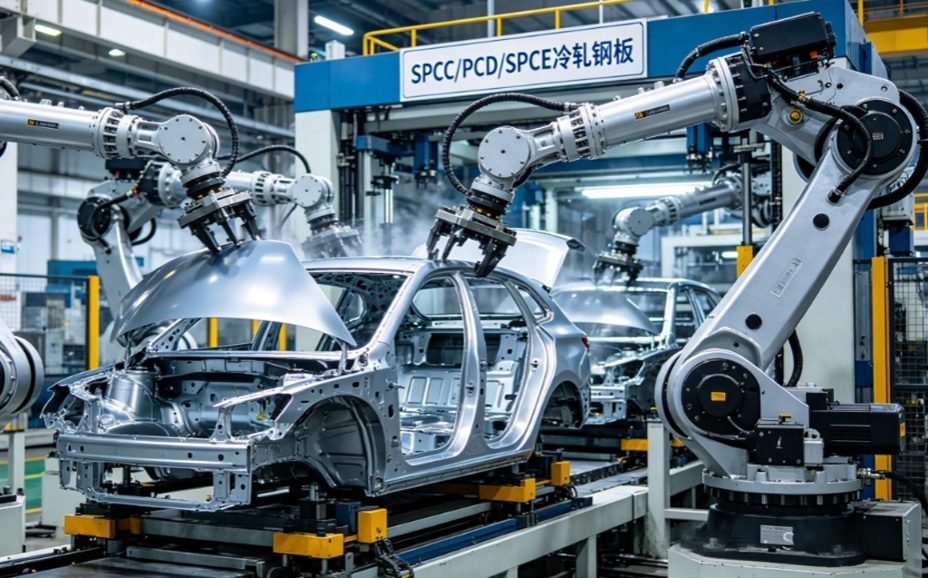
○SPCC: Fuel tank bracket, non-load-bearing structure of the seat, inner plate of the dashboard crossbeam, door interior panel support
○SPCD: Inner panel of the car door, inner panel of the engine hood, inner panel of the luggage compartment cover, inner panel of the fender
○SPCE: Oil pan, shock absorber cover, hub cover, door handle bracket, complex-shaped stamping parts
5. Analysis of Simulation Application Expansion
• Material model: The Hill48 anisotropic yield criterion should be given priority. The actual stress-strain curve, the value of r, and the value of n must be input.
• Pressing Forming Simulation:
○SPCC: The FLD curve is relatively low. The main focus is on wrinkling and thinning rates (controlled within 20%), and the simulation accuracy is high.
○SPCD/SPCE: Low yield-to-strength ratio, strong plastic deformation capability. Precise calibration of the r and n values is required. Special attention should be paid to side wall wrinkling and cracking. SPCE can achieve a deep drawing ratio of over 2.2.
○ Elasticity prediction: The elasticity of SPCC is relatively small (< 1°). For SPCE, elasticity compensation is required when dealing with complex curvatures.
• Structural simulation: A elastoplastic model can be used. It is applicable for the strength and stiffness analysis of non-load-bearing structural components.
II. Hot-rolled carbon steel plates and steel strips (SPHC/SPHD/SPHE)
Conceptual attribute
• Definition: The hot-rolled low-carbon carbon steel plates and steel strips defined by the Japanese Industrial Standard JIS G 3131 are suitable for general structures, stamping, and deep drawing applications.
• Naming rule: S (Steel) + P (Plate) + H (Hot) + Pressing grade letter
• Corresponding brand name:
○SPHC: Commercial grade, corresponding to national standard GB/T 912 Q235B, and European standard EN 10051 S235JR
○SPHD: Pressing grade, corresponding to national standard GB/T 912 for Q235B steel used in pressing, and EU standard DD1
○SPHE: Deep Drawing Grade, corresponding to the national standard GB/T 5213 of 08Al hot rolled deep drawing steel, and the EU standard DD13
2. Physical Chemistry and Mechanical Properties
Chemical composition (melting analysis, %, JIS standard upper limit)
|
Grade |
C |
Si |
Mn |
P |
S |
|
SPHC |
≤0.15 |
≤0.05 |
≤0.60 |
≤0.035 |
≤0.025 |
|
SPHD |
≤0.12 |
≤0.05 |
≤0.50 |
≤0.030 |
≤0.020 |
|
SPHE |
≤0.10 |
≤0.05 |
≤0.45 |
≤0.025 |
≤0.020 |
Mechanical properties (in hot-rolled condition, standard minimum value / typical value)
|
Grade |
Yield Strength (MPa) |
Tensile Strength (MPa) |
Typical Yield-to-Tensile Ratio |
Elongation A50 (%) |
Cold Bending Property (180°) |
|
SPHC |
<235/215 |
270-440/360 |
0.6 |
≥29/33 |
d=a |
|
SPHD |
<235/205 |
270-430/350 |
0.59 |
≥33/37 |
d=0 |
|
SPHE |
<215/195 |
270-410/340 |
0.57 |
≥37/41 |
d=0 |
Note: d represents the diameter of the bend center, and a represents the thickness of the specimen.
3. Introduction to Core Processes
Heating of the slab: Heat to 1150 - 1250℃ to homogenize the austenite.
2. Hot rolling: Rough rolling + Fine rolling, final rolling temperature 850 - 920℃ (austenite recrystallization zone)
3. Cooling: The material is cooled in a laminar flow to 550 - 650℃ before winding.
4. Surface treatment: We can provide black skin rolls, acid-washed rolls and acid-washed oil-coated rolls.
• Process features: The cost is 30-40% lower than that of cold rolling, with a thickness range of 1.5-16mm, and high production efficiency.
4. Industrial and Automotive Vehicle Applications
• Industrial Applications:
○SPHC: Construction materials, scaffolding, container shells, raw materials for welded pipes
○SPHD: Structures made of steel pipes, lightly stamped parts, and agricultural machinery components
○SPHE: Boiler heads, gas storage tank shells, complex stamping parts
• Application in complete vehicles:
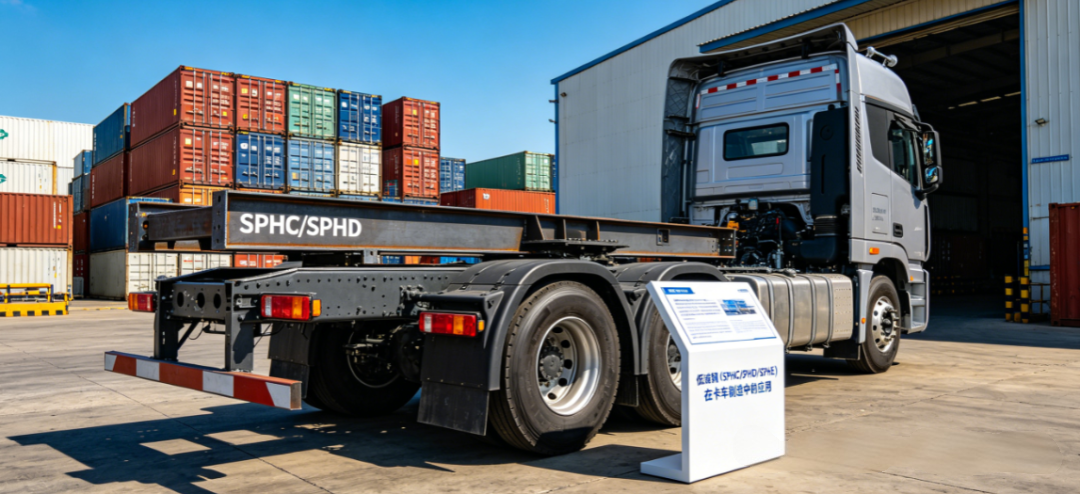
○SPHC: Truck chassis crossbeam, auxiliary frame connection piece, exhaust system flange, spare tire bracket
○SPHD: Wheel spokes, brake base plate, rear suspension bracket of the driver's cabin, fuel tank housing
○SPHE: Passenger car rear axle housing body, engine mounting bracket, steering knuckle bracket, complex structural components of the chassis
5. Analysis of Simulation Application Expansion
• Material model: Employ a plasticity model. It is necessary to accurately input the length of the yield platform and the strain hardening rate.
• Pressing simulation:
The friction coefficient is set at 0.12 - 0.15 (higher than that of the cold-rolled sheet, which is 0.10 - 0.12)
○SPHC: The yield-strength ratio is slightly higher, with the n value ranging from approximately 0.16 to 0.20. The forming limit is relatively low, and the prediction needs to be conservative.
○SPHE: Low yield-to-strength ratio, good formability. It can be referred to as cold-rolled SPCE, but attention should be paid to the influence of surface quality on the forming process.
• Welding simulation: Low carbon content, low risk of brittleness in the heat-affected zone, mainly focuses on welding deformation. The inherent strain method is recommended.
• Fatigue simulation: The surface roughness of hot-rolled plates is relatively high, and their fatigue life is 10-15% lower than that of cold-rolled plates.
III. High-quality Formed Steel Series (SPFC440/SPFC590/SPFC980)
Conceptual Attribute
• Definition: The cold-rolled high-strength steel plates and steel strips defined by the Japanese Industrial Standard JIS G 3135 fall under the category of Advanced High-Strength Steel (AHSS), possessing a balance of high strength and good formability.
• Naming rule: S (Steel) + P (Plate) + F (Formable) + C (Cold) + Minimum tensile strength (MPa)
• Material Type:
○SPFC440/590: Mainly consists of ferritic - pearlitic steel and low-alloy high-strength steel
○SPFC980: Mainly consists of duplex steel (DP) and multiphase steel (CP)
2. Physical Chemistry and Mechanical Properties
Chemical composition (melting analysis, %, JIS standard upper limit)
|
Grade |
C |
Si |
Mn |
P |
S |
Microalloying elements |
|
SPFC440 |
≤0.18 |
≤0.60 |
≤1.60 |
≤0.030 |
≤0.025 |
Nb≤0.06, Ti≤0.15 |
|
SPFC590 |
≤0.20 |
≤0.80 |
≤2.00 |
≤0.025 |
≤0.020 |
Nb≤0.06, Ti≤0.15, V≤0.10 |
|
SPFC980 |
≤0.25 |
≤1.50 |
≤2.50 |
≤0.020 |
≤0.015 |
Cr≤0.80, Mo≤0.50 |
Mechanical properties (annealed state, standard minimum / typical value)
|
Grade |
Yield Strength (MPa) |
Yield Strength (MPa) |
Typical Yield-to-Tensile Ratio |
Elongation A80 (%) |
Hole Expansion Ratio (%) |
180° Bending Performance |
|
SPFC440 |
≥305/330 |
440-560/490 |
0.67 |
≥24/28 |
≥60/70 |
d=a |
|
SPFC590 |
≥420/450 |
590-760/650 |
0.69 |
≥20/24 |
≥45/55 |
d=2a |
|
SPFC980 |
≥685/750 |
980-1200/1050 |
0.71 |
≥10/12 |
≥25/30 |
d=3a |
Note: The yield-to-strength ratio of duplex steel SPFC980 is usually between 0.65 and 0.75, while that of multiphase steel can exceed 0.75.
3. Introduction to Core Processes
Cold rolling: Similar to ordinary cold-rolled steel, but with a higher reduction rate.
2. Continuous annealing:
○SPFC440/590: Achieves high strength through the precipitation strengthening of microalloying elements and fine-grain strengthening.
○SPFC980: Utilizes a rapid heating - insulation - rapid cooling - over-treatment process to form martensite or bainite structure.
3. Surface treatment: Available in hot-dip galvanizing (GI), galvanized iron alloy (GA), and electro-galvanizing (EG) versions. The brand name is changed to SGC series.
• Technical challenge: The SPFC980 has extremely strict requirements for the cooling speed control. The cooling speed must reach above 50℃/s.
4. Industrial and Automotive Vehicle Applications
• Industrial applications: Construction machinery components, high-strength shelves, elevator rails, containers
• Application of complete vehicles (core):
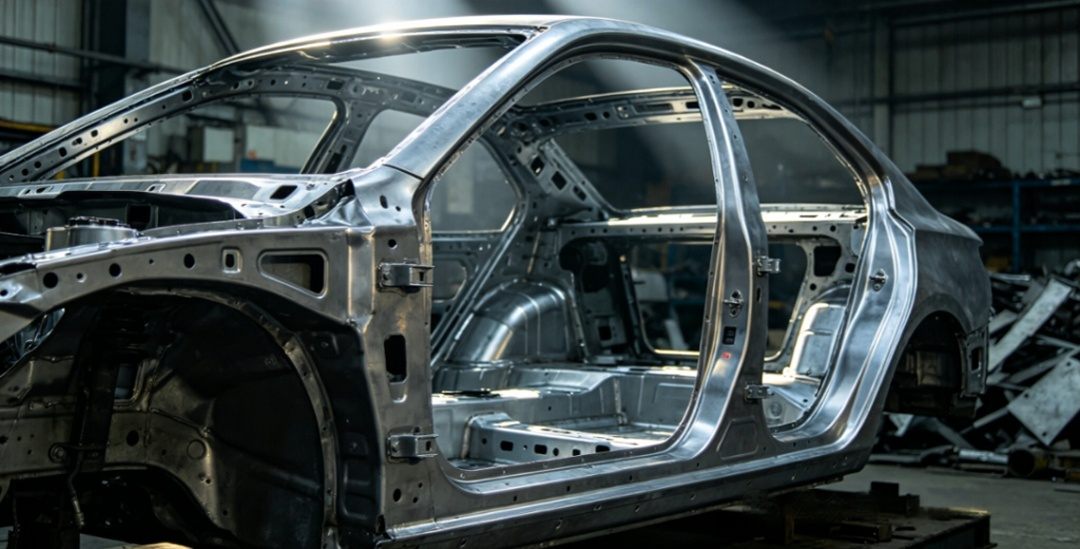
○SPFC440: Body floor panel, seat crossbeam, roof longitudinal beam, floor reinforcement beam
○SPFC590: A-pillar / B-pillar reinforcement plates, door impact beams, floor middle channel reinforcement beams, front longitudinal beams
○SPFC980: Front bumper impact beam body, B-pillar reinforcement plate, floor crossbeam,门槛 reinforcement piece (partially replacing hot-pressed steel)
5. Analysis of Simulation Application Expansion
• Material Model:
○ SPFC440/590: Utilizing the hybrid hardening model (isotropic + dynamic), it can provide more accurate predictions of rebound.
○SPFC980: It is necessary to use a servo hardening model that takes into account the Borsig effect (such as the Yoshida-Uemori model)
• Pressing Forming Simulation:
The yield strength ratio increases with the increase in strength, and the formability gradually decreases.
The FLD curve shifts significantly downward compared to low-carbon steel. The FLD0 value of SPFC980 is approximately 0.15.
○ The conventional FLD prediction of SPFC980 is inaccurate. It is recommended to use the GISSMO or MMC fracture criteria.
Edge cracking is the primary failure mode of the SPFC980, and it is necessary to reduce the strain sensitivity in the edge-cutting area.
• Resilience Prediction:
The higher the yield strength ratio, the greater the rebound: The rebound of SPFC440 is approximately 1-3°, that of SPFC590 is about 3-5°, and that of SPFC980 can reach 5-10°.
It is necessary to perform mold surface compensation, and the compensation amount is usually 1.2 to 1.5 times the amount of springback.
• Collision simulation: The SPFC980 material exhibits excellent energy absorption capabilities and is one of the preferred materials for vehicle safety structures.
IV. High-quality carbon structural steel series (SAPH310/SAPH370)
Conceptual Attribute
• Definition: The automotive structural hot-rolled steel plates and steel strips defined by the Japanese Industrial Standard JIS G 3113 are specifically designed for the chassis and suspension systems of automobiles.
• Naming rule: S (Steel) + A (Automobile) + P (Plate) + H (Hot) + Minimum tensile strength (MPa)
• Corresponding brand name:
○SAPH310: Corresponding to the national standard GB/T 3273 Q310
○SAPH370: Corresponding to national standard GB/T 3273 Q370, and EU standard S355MC
2. Physical Chemistry and Mechanical Properties
Chemical composition (melting analysis, %, JIS standard upper limit)
|
Grade |
C |
Si |
Mn |
P |
S |
Alt |
|
SAPH310 |
≤0.12 |
≤0.30 |
≤0.75 |
≤0.030 |
≤0.025 |
≥0.015 |
|
SAPH370 |
≤0.15 |
≤0.35 |
≤1.00 |
≤0.030 |
≤0.025 |
≥0.015 |
Mechanical properties (in hot-rolled condition, standard minimum value / typical value)
|
Grade |
Yield Strength (MPa) |
Tensile Strength (MPa) |
Typical Yield-to-Tensile Ratio |
Elongation A50 (%) |
Hole Expansion Ratio (%) |
180° Cold Bending Property |
|
SAPH310 |
≥185/210 |
310-450/380 |
0.55 |
≥33/37 |
≥80/90 |
d=0 |
|
SAPH370 |
≥225/260 |
370-530/440 |
0.59 |
≥30/34 |
≥70/80 |
d=0 |
3. Introduction to Core Processes
• Controlled Rolling and Cooling (TMCP):
a. The slab is heated to 1200 - 1250℃
b. The rough rolling is carried out in the austenite recrystallization zone.
c. The final rolling is carried out in the austenite non-recrystallization zone (final rolling temperature 800 - 850℃)
d. Rapidly cool to 500 - 600℃ and then wind into coils
• Process advantage: Achieve a combination of high strength and high toughness through fine-grain strengthening, without the need for subsequent heat treatment.
• Surface condition: Usually supplied as acid-washed and oil-coated rolls, with surface roughness ranging from 1.6 to 3.2 μm.
4. Industrial and Automotive Vehicle Applications
• Industrial applications: Bicycle frames, motorcycle components, agricultural machinery chassis, construction machinery moving mechanisms
• Application of complete vehicles (core):
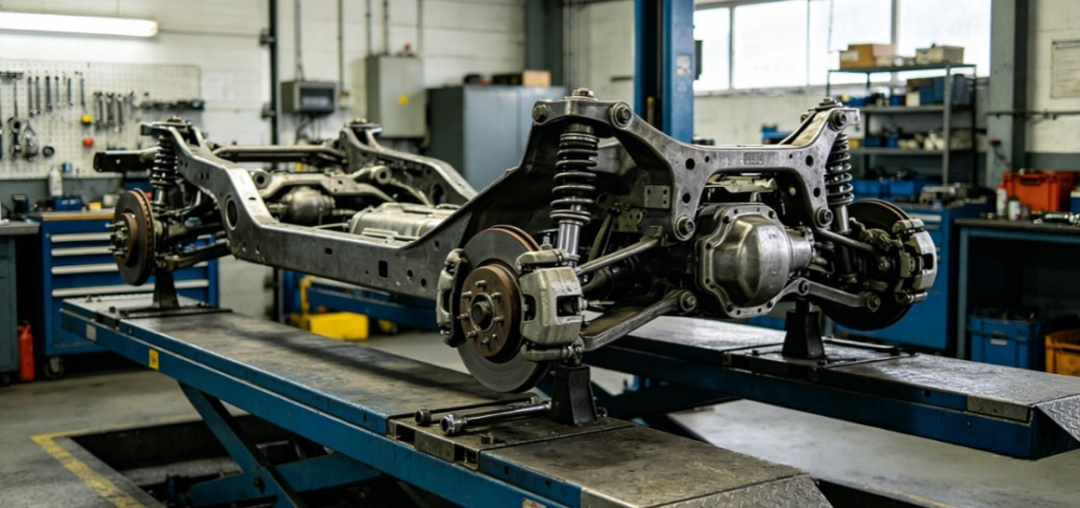
○SAPH310: The main body of the car rear axle housing, the longitudinal arm of the torsion beam, the lower support of the shock absorber, the trailer hook, and the stabilizer bar.
○SAPH370: Load-bearing truck frame longitudinal beams and cross beams, engine mounting brackets, control arms, steering knuckle arms, and auxiliary frames
5. Analysis of Simulation Application Expansion
• Material model: A classic elastoplastic model can be used. The yield plateau section must be accurately input.
• Pressing simulation:
○ The yield-strength ratio is low, and the cold bending forming performance is excellent. The simulation is simple, and the main focus is on the springback.
○ SAPH370 has an expansion rate of over 70%, excellent flanging performance, and can directly call the HER value from the material library during simulation.
• Fatigue Simulation:
The fatigue limit is approximately 40-50% of the tensile strength (SAPH310 is about 150 MPa, SAPH370 is about 180 MPa)
The fatigue life of the welded joint has significantly decreased. It is recommended to use the equivalent structural stress method (in accordance with ASME standards).
The influence of surface roughness and stress concentration coefficient should be taken into account.
• Collision simulation: The chassis components mainly bear bending and torsional loads during a collision, and it is necessary to pay attention to plastic deformation and fracture.
V. Carbon Steel Casting Series (HT150/HT250)
Conceptual Attribute
• Definition: The gray cast iron parts defined by the Chinese national standard GB/T 9439-2018 are named so because their fracture surfaces appear gray.
• Naming rule: HT (Hui Tie) + Minimum Tensile Strength (MPa)
• Organizational characteristics: The flake graphite is distributed on the ferrite or pearlite matrix. The presence of the graphite flakes endows gray cast iron with excellent vibration damping and wear resistance properties, but it also results in lower toughness.
2. Physical Chemistry and Mechanical Properties
Chemical composition (melting analysis, %, typical values)
|
Grade |
C |
Si |
Mn |
P |
S |
Carbon Equivalent (CE) |
|
HT150 |
3.2-3.6 |
1.8-2.2 |
0.5-0.8 |
≤0.20 |
≤0.12 |
3.8-4.2 |
|
HT250 |
2.9-3.3 |
1.2-1.8 |
0.8-1.2 |
≤0.15 |
≤0.10 |
3.4-3.8 |
Mechanical properties (single cast test bar, standard minimum value / typical value)
|
Grade |
Yield Strength (MPa) |
Tensile Strength (MPa) |
Typical Yield-to-Tensile Ratio |
Hardness (HB) |
Elastic Modulus (GPa) |
Elastic Modulus (GPa) |
|
HT150 |
≥150/170 |
≥600/650 |
0.90 以上 |
130-180/150 |
90-110/100 |
2002/5/3 |
|
HT250 |
≥250/280 |
≥1000/1100 |
0.95 以上 |
180-230/200 |
110-130/120 |
2005/10/7 |
Note: Gray cast iron is a brittle material. Its yield strength is close to its tensile strength, and the yield strength-to-yield strength ratio is extremely high. There is almost no obvious plastic deformation stage.
Physical properties
• Density: 7.0 - 7.3 g/cm³ (lower than steel)
• Melting point: 1140 - 1200℃
• Thermal conductivity: 45 - 55 W/(m・K)
• Damping ratio: 3-5% (much higher than that of steel < 1%)
3. Introduction to Core Processes
Melting: Melting in a blast furnace or electric furnace, with control over the carbon equivalent and alloy element content
2. Molding treatment: For HT250, silicon iron foraging agent needs to be added to refine the graphite flakes and enhance the strength.
3. Casting: The main method is sand casting, and metal casting can also be used.
4. Heat treatment: Usually, stress-relieving annealing (at 550-600°C, held for 2-4 hours) is carried out to eliminate the internal stress from the casting process.
• Process characteristics: Excellent casting performance, high fluidity, low shrinkage rate, and low cost.
4. Industrial and Automotive Vehicle Applications
• Industrial Applications:
○HT150: Machine base, worktable, valve body, pump housing
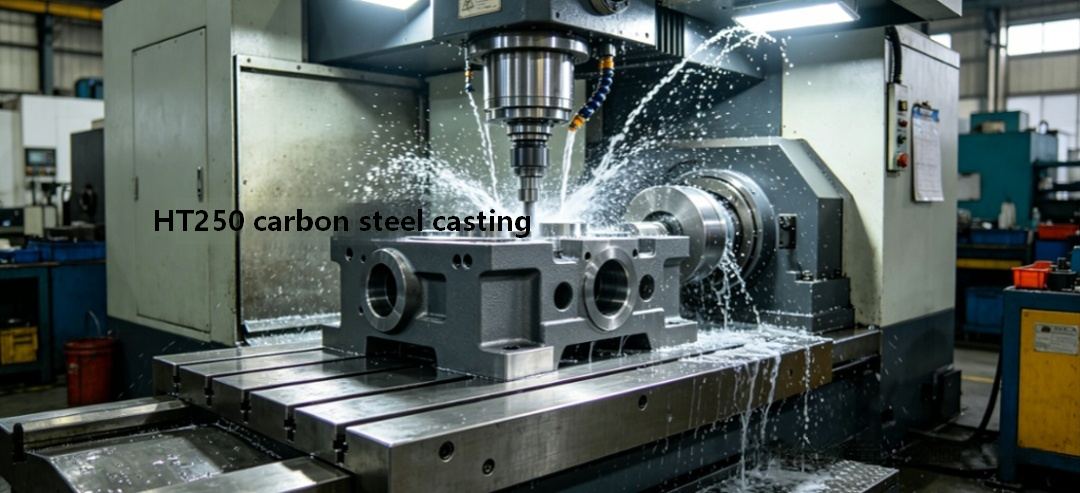
○HT250: Machine tool guide rails, cylinder bodies, gearbox housings, bearing seats
• Application in complete vehicles:
○HT150: Low-end brake discs for passenger vehicles, drum brakes for commercial vehicles, clutch pressure plates, flywheel housings
○HT250: Turbocharger housing, exhaust manifold, brake caliper housing, engine cylinder block (heavy-duty diesel engine), transmission housing
5. Analysis of Simulation Application Expansion
• Material Model:
○The isotropic elastic-plastic model cannot be used; instead, the specialized material model for cast iron (such as LS-DYNA Mat 145) must be employed.
The tensile and compressive properties need to be defined separately. The compressive strength of gray cast iron is 4 to 5 times that of the tensile strength.
The yield strength-to-strength ratio is extremely high, with almost no plastic deformation. The fracture occurs suddenly, and the damage model employs the maximum principal stress criterion.
• Structural Simulation:
○ Focus on the area with the maximum principal stress, rather than Mises stress.
The fracture of gray cast iron is always dominated by tensile force. Even under compressive conditions, lateral tensile force can still lead to fracture.
• Fatigue Simulation:
○ It is recommended to use the stress-life method (S-N curve)
○ Gray cast iron has no definite fatigue limit. The S-N curve still shows a downward trend after 10⁷ cycles.
The influence of average stress should be taken into account and the Goodman curve should be used for correction.
• NVH Simulation:
The high damping property of gray cast iron has a significant impact on NVH results.
In modal analysis, setting the damping ratio to 3-5% can significantly improve the simulation accuracy.
• Casting simulation: Use MAGMA or ProCAST to simulate graphite expansion and porosity defects. For HT250, special attention should be paid to the nucleation effect.
六、Summary Table of Material Properties Comparison
|
Material Series |
Typical Grade |
Typical Tensile Strength (MPa) |
Typical Yield-to-Tensile Ratio |
Typical Yield-to-Tensile Ratio |
Core Characteristics |
|
||||
|
Cold Rolled Low Carbon Steel |
SPCE |
320 |
0.55 |
42 |
Best formability |
|
||||
|
Hot Rolled Low Carbon Steel |
SPHE |
340 |
0.57 |
41 |
Low cost, good formability |
|
||||
|
Automotive Structural Steel |
SAPH310 |
380 |
0.55 |
37 |
Special for chassis, excellent cold bending property |
|
||||
|
Cold Rolled High Strength Steel |
SPFC440 |
490 |
0.67 |
28 |
Balanced strength and formability |
|
||||
|
Cold Rolled High Strength Steel |
SPFC590 |
650 |
0.69 |
24 |
High strength with decent formability |
|
||||
|
Cold Rolled Ultra High Strength Steel |
SPFC980 |
1050 |
0.71 |
12 |
Ultra-high strength, excellent weight reduction effect |
|
||||
|
Grey Cast Iron |
HT250 |
280 |
0.95 up |
<1 |
Vibration damping & wear resistant, high brittleness |
|
||||
|
|
Material Series |
Core Advantages |
Main Limitations |
Material Selection Recommendations for Automobiles |
|
|
SPCC/SPCD/SPCE |
Low yield-to-tensile ratio, excellent formability, bright surface finish, low cost |
Low strength, poor corrosion resistance |
Inner body panels, exterior panels, shallow stamping structural parts; SPCE for deep drawing components |
|
|
SPHC/SPHD/SPHE |
Low yield-to-tensile ratio, low cost, wide thickness range, good weldability |
Poor surface quality and dimensional accuracy |
Chassis structural parts, rear axle housings, brackets; SPHE for complex stamped parts |
|
|
SPFC440/590/980 |
High strength, remarkable weight reduction effect |
High yield-to-tensile ratio, severe springback, difficult stamping for ultra-high strength steel |
Body safety structural parts, reinforcements, crash beams; SPFC980 for critical safety components |
|
|
SAPH310/370 |
Low yield-to-tensile ratio, specially designed for automotive chassis, superior cold bending and welding performance |
Limited upper strength range |
Control arms, vehicle frames, suspension brackets, rear axle housings and other chassis parts |
|
|
HT150/HT250 |
Good vibration damping, wear resistance, excellent castability, low cost |
Extremely high yield-to-tensile ratio, high brittleness and poor toughness |
Brake discs, brake calipers, engine blocks, transmission housings |