


Among the technical routes for lightweighting of automobiles and construction machinery, hot-rolled high-strength steel serves as the most widely adopted core structural material with optimal cost performance. It covers a wide range of applications, including frame longitudinal beams and cargo floor panels for commercial vehicles, chassis subframes and control arms for passenger cars, as well as load-bearing structures of battery packs for new energy vehicles. Ranging from 240 MPa high-formability ductile steel to 960 MPa ultra-high-strength steel, the performance limits, process characteristics and failure risks of various grades directly determine the weight reduction ceiling, safety margin and manufacturing cost of structures.
In daily tasks such as material selection, CAE simulation modeling and on-site failure investigation, many engineers frequently encounter issues including mismatched material grades, inaccurate performance parameters and ambiguous judgment of root failure causes. To address these challenges, we systematically sort out full-spectrum technical data for mainstream grades of two major series: conventional hot-rolled steel and hot-rolled fine-grained steel. The coverage spans fundamental concepts, mechanical properties, manufacturing processes, industrial and vehicle-level applications, key points for CAE simulation, as well as root causes and solutions for four typical failure modes.
一、Overview of Material System & Core Concepts
The materials discussed in this paper fall into two categories, both classified as hot-rolled structural steels. Their core distinction lies in grain refinement processes and strength grades.
1. Conventional Hot-Rolled Steel
This category of steel is produced via conventional hot rolling processes without dedicated grain-refining thermomechanical controlled rolling and cooling treatments. Its strength improvement is achieved by low carbon content coupled with minor alloying elements, while retaining basic cold formability. It is suitable for general structural components and simply formed parts.
● XF350 / XF450: Commercial-grade hot-rolled structural steels. The numerical figures denote the minimum yield strength in MPa. They are low-carbon hot-rolled steels for cold forming. Chemical composition and detailed mechanical properties vary slightly among different steel mills, and these grades are mostly used for load-bearing structures with moderate formability requirements.
● Domex 240YP: Cold-formable hot-rolled steel from Sweden’s SSAB. The suffix "YP" stands for Yield Point steel. It is a low-strength, high-ductility grade featuring excellent cold bending and stamping performance, compliant with standard EN 10051.
● Domex MC series (315MC ~ 600MC): Thermomechanically rolled high-strength steels under SSAB’s product line. Their properties fully match the S-series MC steels specified in EN 10149-2, supporting dual-grade certification. This series highlights outstanding batch consistency and high steel cleanliness.
2. Hot-Rolled Fine-Grain Steel
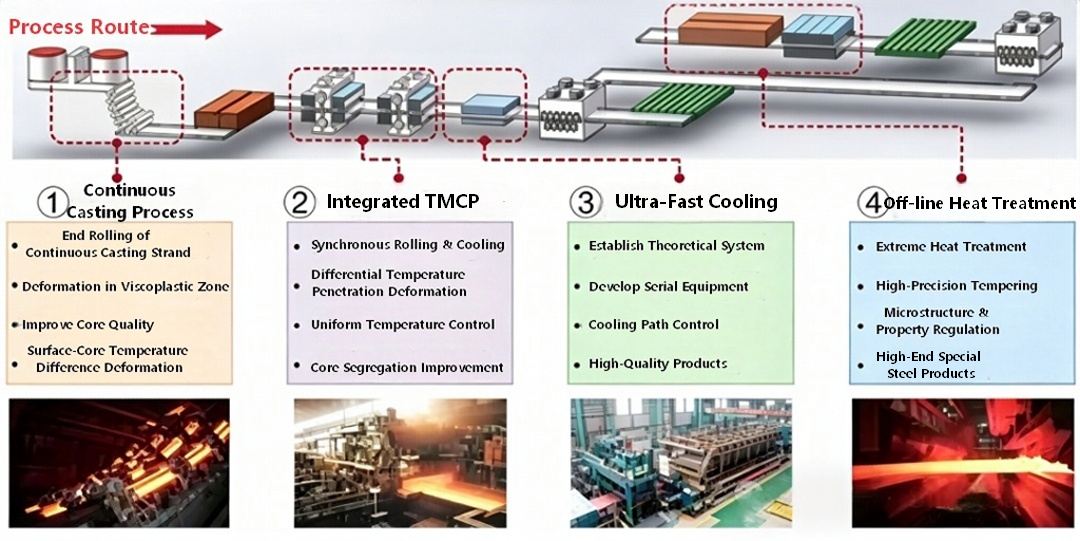
Also known as TMCP microalloyed high-strength steel, it complies with European standard EN 10149-2. Its grade designation rules are defined as follows:
● S: Structural steel
● Numeral: Minimum yield strength value (MPa)
● MC: Thermo-mechanically rolled steel suitable for cold forming
Ultra-fine grain structure is obtained through TMCP processes and microalloying with Nb, V and Ti. These steels maintain superior formability, weldability and low-temperature toughness even at high strength levels, making them the core material for lightweight design in automotive and construction machinery at present.
二、Comparison of Core Performance Parameters
1. Summary of Mechanical Properties (Minimum values as standard, thickness ≤ 10 mm)
|
Category |
Grade |
Minimum Yield Strength ReH (MPa) |
Tensile Strength Rm (MPa) |
Elongation after Fracture A5 (%) |
Typical Yield-to-Tensile Ratio Range |
|
Conventional Hot-Rolled Steel |
XF350 |
≥350 |
430~560 |
≥22 |
0.63~0.81 |
|
|
XF450 |
≥450 |
520~650 |
≥18 |
0.69~0.87 |
|
|
Domex 240YP |
≥240 |
340~420 |
≥28 |
0.57~0.71 |
|
|
Domex 315MC |
≥315 |
390~510 |
≥24 |
0.62~0.81 |
|
|
Domex 355MC |
≥355 |
430~550 |
≥23 |
0.65~0.83 |
|
|
Domex 420MC |
≥420 |
480~620 |
≥19 |
0.68~0.88 |
|
|
Domex 500MC |
≥500 |
550~700 |
≥16 |
0.71~0.91 |
|
|
Domex 500MC |
≥500 |
550~700 |
≥16 |
0.71~0.91 |
|
Hot-Rolled Fine-Grain Steel |
S315MC |
≥315 |
390~510 |
≥24 |
0.62~0.81 |
|
|
S355MC |
≥355 |
430~550 |
≥23 |
0.65~0.83 |
|
|
S420MC |
≥420 |
480~620 |
≥19 |
0.68~0.88 |
|
|
S460MC |
≥460 |
520~670 |
≥17 |
0.69~0.88 |
|
|
S500MC |
≥500 |
550~700 |
≥16 |
0.71~0.91 |
|
|
S550MC |
≥550 |
600~760 |
≥15 |
0.72~0.92 |
|
|
S600MC |
≥600 |
650~820 |
≥13 |
0.73~0.92 |
|
|
S650MC |
≥650 |
700~880 |
≥12 |
0.74~0.93 |
|
|
S700MC |
≥700 |
750~950 |
≥11 |
0.74~0.93 |
|
|
S900MC |
≥900 |
930~1200 |
≥8 |
0.75~0.97 |
|
|
S960MC |
≥960 |
980~1250 |
≥7 |
0.77~0.98 |
√ Data sources: Standard EN 10149-2:2013, official SSAB product manuals and technical specifications of Salzgitter Steelworks.
Yield-to-tensile ratio rule: The overall yield-to-tensile ratio rises with increasing strength grade. At the same strength level, fine-grained steel has a slightly higher yield-to-tensile ratio than conventional hot-rolled steel, yet its plasticity margin is still sufficient to meet cold forming requirements.
2. Chemical Composition and Physical Properties
• Component Characteristics: All series are of low-carbon design (C ≤ 0.12%). The strength is enhanced through Mn, Si solid solution strengthening and Nb/V/Ti microalloy precipitation strengthening. The content of P is ≤ 0.025% and S is ≤ 0.015%. The carbon equivalent (CEV) is generally ≤ 0.45%, ensuring excellent welding performance.
• Physical parameters: Elastic modulus E = 206 GPa, Poisson's ratio μ = 0.3, density ρ = 7.85 g/cm³, thermal expansion coefficient ≈ 11.5 × 10⁻⁶ /℃. These values are basically consistent with those of ordinary carbon steel, and the simulation calculations can directly use the physical parameters of common steel.
三、Production Process Analysis
1. Ordinary hot rolling process
The conventional hot rolling process is as follows: slab heating (1150 - 1250℃) → rough rolling → fine rolling → laminar cooling → rolling. This process relies on austenite recrystallization to refine the grains, with the microstructure mainly consisting of ferrite + pearlite. It has high production efficiency and low cost, but the strength improvement potential is limited, and the formability significantly decreases under high strength conditions.
2. TMCP Thermal Mechanical Rolling Process (Core Technology for Fine-Grained Steel)
TMCP (Thermo-Mechanical Control Process) refers to the control rolling and control cooling technology. It is the core production process for fine-grained high-strength steel, enabling the combination of high strength and high toughness without the need for subsequent heat treatment.
• Core Principle:
a. Control rolling stage: In the austenite non-recrystallization zone (800 - 950℃), perform large reduction rolling to elongate the austenite grains and accumulate deformation energy, providing a large number of nucleation sites for the subsequent phase transformation;
b. Controlled cooling stage: Immediately after final rolling, accelerated cooling (layered water cooling) is adopted to quickly pass through the ferrite - pearlite transformation zone, inhibiting grain growth and ultimately obtaining ultrafine ferrite grains (up to 3-5 μm). In some high-strength grades, bainite structure will be formed, achieving the combination of fine-grain strengthening and phase transformation strengthening.
• Process Advantage: Without increasing the carbon content, it significantly enhances the strength while maintaining excellent plasticity, toughness and weldability. This is currently the most cost-effective production path for high-strength steel.
四、Industrial and Full-Vehicle Automotive Application Scenarios
1. General Industrial Applications
Construction machinery: Dump truck cargo bodies, crane booms and excavator structural parts. •High strength enables weight reduction and higher load capacity.
•Logistics equipment: Containers, semi-trailer frames and van side panels, which curb curb weight and raise payload capacity.
•Municipal and energy industries: Oil & gas transmission pipelines, photovoltaic supports and hoisting machinery structures, balancing strength and low-temperature toughness.
2. Full-Vehicle Automotive Applications
Hot-rolled high-strength steel acts as the core material for automotive chassis and load-bearing structures, covering all application scenarios of commercial and passenger vehicles.
(1) Commercial Vehicle Sector
•Frame system: Longitudinal beams, cross beams and reinforcement plates are the primary application fields for S500MC and S700MC. Domestic heavy-duty trucks widely adopt 600/700 MPa high-strength steel to replace traditional 510L frame steel, delivering a frame weight reduction of 15%–30%. For instance, substituting B510L with 700 MPa grade steel allows heavy truck longitudinal beams to switch from double-layer to single-layer design, achieving a weight saving of over 30%.
•Cargo bodies and axles: Grades above S550MC are used for dump truck floor plates to greatly boost impact resistance and wear resistance. Axle housings adopt S420MC–S500MC, balancing formability and load capacity.
(2) Passenger Vehicle & New Energy Vehicle Sector
•Chassis system: S355MC–S550MC are commonly used for subframes, control arms and knuckle brackets. Replacing conventional low-carbon steel cuts weight by more than 20%, while enhancing chassis stiffness and handling performance.
•Body structures: S420MC–S600MC are applied to bumper crossmembers, sill reinforcements and seat rails to improve crash energy absorption and anti-intrusion performance.
五、 Extended Applications in CAE Simulation
Simulation analysis of hot-rolled high-strength steel covers four core scenarios: structural performance, crash safety, fatigue durability and forming processes, with corresponding material models and parameters required for each scenario.
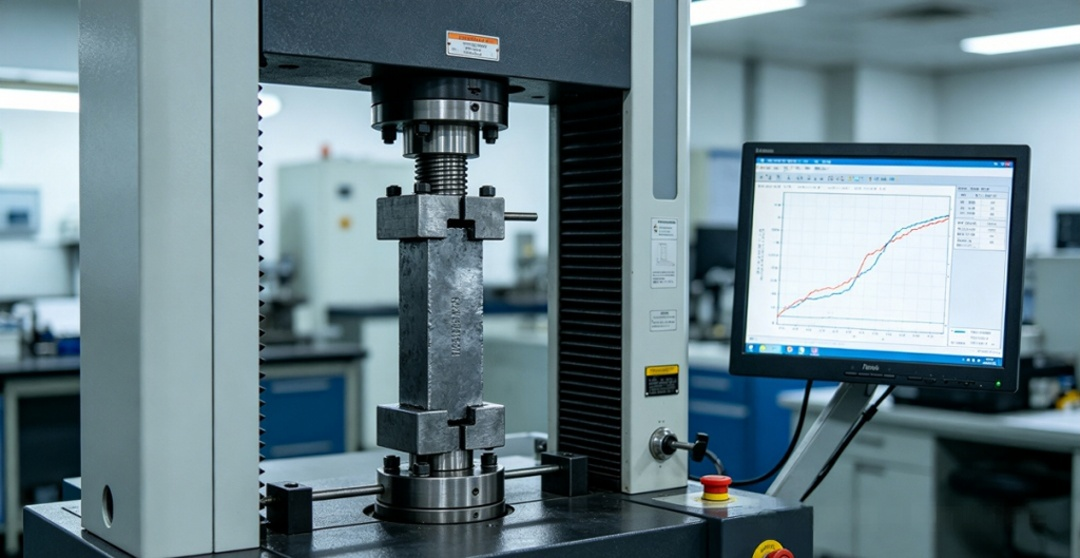
1. Static Strength and Stiffness Simulation
•Applicable scenarios: Frame bending/torsional stiffness, static load strength of suspension components, stress analysis of bolted connections, etc.
•Material models: Linear elastic model for routine stiffness and low-load analysis; elastoplastic model paired with true stress-strain curves for ultimate load and plastic deformation verification.
•Common software: Abaqus, OptiStruct, Ansys.
•Key notes: High-strength steel exhibits an indistinct yield plateau. True plastic strain data converted from engineering stress and strain shall be adopted to avoid overestimating the load-bearing capacity of structures.
2. Crash Safety Simulation
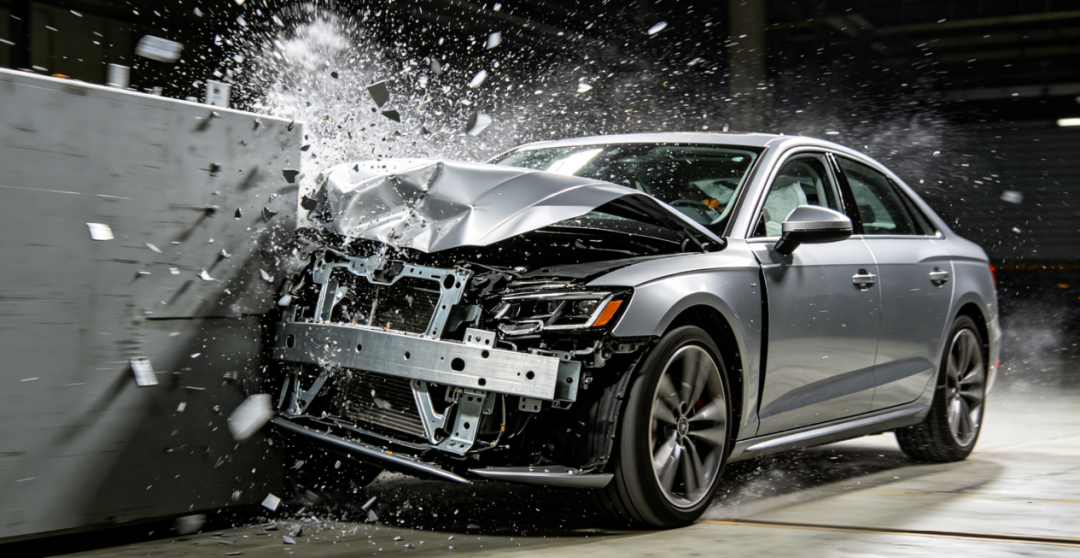
•Applicable scenarios: Full-vehicle crash, bumper crushing, chassis impact conditions
•Material model: Johnson-Cook constitutive model with strain rate parameters incorporated. High-strength steels feature remarkable strain-rate hardening effect; their yield strength rises significantly under high-speed crash loads. Ignoring strain rate effects will lead to overly conservative simulation results.
•Common software: LS-DYNA, PAM-CRASH
•Key notes: Steels with high yield-to-tensile ratios have a narrow plastic deformation range, and their energy absorption behavior differs from low-carbon steels. Appropriate failure criteria must be assigned to eliminate deviation in fracture prediction.
3. Fatigue Durability Simulation
•Applicable scenarios: Fatigue life prediction under alternating loads for chassis components and vehicle frames
•Analysis methods: Stress-life method (S-N curve) for high-cycle fatigue; strain-life method for low-cycle fatigue. Corrections shall be performed based on material fatigue grade, surface roughness and stress concentration factor.
•Common software: nCode DesignLife, FE-SAFE, MSC Fatigue
•Key notes: High-strength steels are more sensitive to inclusions and surface defects. Their fatigue strength does not increase linearly with tensile strength. Measured S-N curves of the corresponding steel grades must be adopted instead of proportional scaling based on strength.
4. Cold Forming Process Simulation
•Applicable scenarios: Longitudinal beam bending, stamping forming and springback prediction
•Common software: AutoForm, Dynaform, LS-DYNA
•Key notes: Fine-grained high-strength steel generates larger springback than conventional low-carbon steel, and springback becomes more prominent as yield strength increases. Accurate input of material hardening curves and anisotropy parameters is required in simulation to predict springback in advance and guide die compensation.
六、Common Failure Issues During Production & Service and Corresponding Solutions
1. Material Fatigue
Problem Description
Under cyclic alternating loads, microcracks initiate and propagate even at stresses far below the yield strength, eventually causing sudden fracture. This is the most prevalent failure mode for automotive chassis and vehicle frames.
Root Causes:
•Stress concentration induced by structural design features (sharp corners, holes, weld roots);
•Oversized internal inclusions (Al₂O₃, TiN) inside steel, acting as fatigue crack initiation sites;
•Poor surface quality (scratches, corrosion pits) or welding defects (incomplete penetration, undercut);
•Corrosion pits accelerate crack initiation under corrosive environments (corrosion fatigue).
Solutions:
•Design perspective: Optimize structural fillets and avoid abrupt section changes to reduce stress concentration factors;
•Material perspective: Apply secondary metallurgy refining processes to control inclusion size and distribution, and select steel grades with superior cleanliness;
•Process perspective: Implement shot peening strengthening on critical load-bearing surfaces to introduce compressive residual stress on the surface; standardize welding quality and grind weld toes after welding;
•Protection perspective: Apply anti-corrosion coatings to prevent coupled damage of corrosion and fatigue.
2. Material Corrosion
Problem description: The material undergoes chemical or electrochemical reactions in humid, salt-spray, and acidic environments, resulting in surface rusting, reduction of cross-sectional area, and ultimately leading to decreased strength and shortened fatigue life.
Causes:
• Electrochemical corrosion: A water film combined with oxygen forms an electrochemical cell, which is the primary form of corrosion in an atmospheric environment;
• Salt fog corrosion: In coastal or winter road environments where salt is applied, chloride ions accelerate the dissolution of the anode.
• Crevice corrosion: In the gaps of bolted connections and lap joints, the lack of oxygen leads to localized corrosion.
Solution:
• Surface protection: Select protective schemes such as hot-dip galvanizing, electrophoretic coating, or epoxy zinc-rich coating based on the environmental grade.
• Design optimization: Avoid water accumulation structures. Sealing glue is used to seal the gaps at the joints;
• Material selection: For high-corrosive environments, the corrosion-resistant steel version can be chosen, or the coating thickness can be increased to provide redundancy.
3. Material plastic deformation
Problem description: During the use of the components, irreversible plastic deformation occurs, resulting in dimensional deviations of the structure, assembly failure, and reduced load-bearing capacity. For example, the longitudinal beams of the vehicle frame bend, and the control arms deform, etc.
Causes:
• The design load margin is insufficient, and the actual working condition stress exceeds the material's yield strength;
• The material's yield strength is lower than the standard requirement (the material is不合格).
• Extreme conditions such as shock and overload exceed the design limits.
Solution:
• Design side: Verify the stress under extreme conditions, and retain a reasonable yield safety factor (generally ≥1.3 for general structures, ≥1.5 for critical load-bearing components);
• Material side: Conduct strict incoming inspection of yield strength, and preferentially select TMCP fine-grained steel with stable performance;
• Structural end: Add reinforcing ribs to the easily deformed areas to increase the section's moment of inertia and reduce the working stress.
4. Material cracking
Problem description: Macroscopic cracks occur in the material during the forming process or usage, directly leading to structural failure. These cracks are classified into three types: cold forming cracks, welding heat-affected zone cracks, and usage-induced brittle cracks.
Causes:
• Cold forming cracking: The bending radius is too small, the elongation is insufficient, and there are burrs and micro-cracks at the material edges;
• Weld cracking: Excessive carbon content, improper welding process, and rapid post-weld cooling leading to the brittleness of the heat-affected zone;
• Cracking occurs: The material lacks sufficient toughness in low-temperature environments, or undergoes brittle fracture under impact loads.
Solution:
• Finishing end: Match the minimum bending radius according to the material grade (the higher the strength, the larger the bending radius). After shearing, remove the burrs at the edges by grinding.
• Welding end: Use low-hydrogen welding materials, control the welding heat input, preheat the thick plates before welding to avoid excessive hardness in the heat-affected zone;
• Usage end: For low-temperature environments, grade D and grade E steel types with high impact toughness should be selected to prevent the components from being subjected to sudden impact loads.
七、Conclusions and Development Trends
Hot-rolled fine-grained high-strength steel boasts comprehensive advantages of high strength, high toughness, excellent formability and good weldability, making it the preferred material for lightweight design in automobiles and construction machinery. At present, the industry evolves along two major directions:
First, continuous breakthroughs in strength grades, with grades such as S1100MC and even higher-strength steels gradually being commercialized.
Second, multi-functional development integrating high strength, high hole-expansion performance and superior corrosion resistance, to meet complex requirements of emerging applications including new energy vehicle chassis and battery packs.
From the perspective of CAE simulation and engineering application, accurate mastery of materials’ performance limits, failure laws and process characteristics serves as the core prerequisite to fully exploit the weight-reduction potential of high-strength steel and guarantee structural safety.
•New energy vehicles: S550MC–S700MC high-strength steel is extensively adopted for battery pack lower housings and mounting brackets. It meets the strength requirements for battery protection while balancing curb weight and driving range.


