


Against the industry consensus that “weight reduction equals extended range and improved safety” for new energy vehicles (NEVs), lightweighting has long evolved from an optional upgrade to a core proposition in vehicle development. However, when it comes to practical engineering material selection, many engineers encounter similar dilemmas: Magnesium alloys deliver excellent weight reduction performance, but how to prevent corrosion? There is a wide range of grades for 5-series aluminum sheets — should 5182 or 5754 be adopted for inner panels? What is the rational application method for honeycomb aluminum and foamed aluminum in battery packs? Inaccurate material parameters render even the most sophisticated simulation results unfeasible for practical implementation.
This paper systematically organizes the matrix of mainstream lightweight materials for automotive applications. It covers five core dimensions including chemical composition characteristics, mechanical properties (including yield-tensile strength ratio), manufacturing processes, vehicle application scenarios, and key CAE simulation modeling points, spanning AM50/AM60 die-cast magnesium alloys, full-series 3xxx/5xxx wrought aluminum alloys, and functional aluminum materials widely used in battery systems and energy-absorbing scenarios such as aluminum honeycomb and foamed aluminum. Furthermore, it provides practical engineering solutions to four high-frequency failure issues: fatigue, corrosion, deformation and cracking.
一、Magnesium Alloy Series: AM50 / AM60
1. Material Overview and Compositional Characteristics
The AM series are Mg-Al-Mn system die-cast magnesium alloys, in which the numbers in the grade designations indicate the nominal aluminum mass fraction. With excellent ductility, these alloys are the second most widely used die-cast magnesium materials for automotive applications, after AZ91D.
|
Grade |
Aluminum (Al) Content |
Manganese (Mn) Content |
Maximum Allowable Impurities (Cu, Ni, Fe) |
Density |
|
AM50A |
4.5%–5.3% |
0.28%–0.5% |
≤0.008% / ≤0.001% / ≤0.004% |
1.77 g/cm³ |
|
AM60B |
5.6%–6.4% |
0.26%–0.5% |
≤0.008% / ≤0.001% / ≤0.004% |
1.78 g/cm³ |
Core Characteristics
Compared with AZ91D, the lower aluminum content brings about a slight drop in strength while markedly improves ductility and impact toughness. Manganese is mainly added to counteract iron‑based impurities and enhance corrosion resistance. Its density accounts for roughly 64 % of aluminum and 22 % of steel, delivering outstanding specific stiffness and vibration‑damping performance.
2.Physical and Mechanical Properties (High‑Pressure Die‑Cast Condition)
|
Performance Indicators |
AM50A |
AM60B |
|
Ultimate Tensile Strength |
220–250 MPa |
220–240 MPa |
|
Yield Strength |
130–150 MPa |
130–160 MPa |
|
Elongation after Fracture |
10%–15% |
6%–10% |
|
Yield to Tensile Ratio |
0.59–0.60 |
0.59–0.67 |
|
Brinell Hardness |
~60 |
~65 |
|
Melting Point Range |
590–630℃ |
585–625℃ |
|
Thermal Conductivity |
~120 W/(m·K) |
~115 W/(m·K) |
|
Coefficient of Linear Thermal Expansion |
26×10⁻⁶ /℃ |
26×10⁻⁶ /℃ |
3. Manufacturing Process
●Mainstream Process: High-Pressure Die Casting (HPDC). The filling speed ranges from 40–80 m/s, the casting temperature is 680–750℃, and the mold temperature is 180–250℃.
●Process Characteristics: The alloy exhibits excellent casting fluidity and is suitable for forming complex thin-walled structures. The solidification shrinkage rate is approximately 4%–5%, which requires well-designed gating, riser systems and cooling channels.
●Post-treatment: Generally supplied in the as-cast (F) condition without heat treatment. Surface treatments such as shot blasting, chemical conversion coating, and micro-arc oxidation (MAO) can be applied.
●Joining Process: Predominantly self-piercing riveting (SPR) and adhesive bonding. Welding is prone to hot cracking; thus, friction stir welding (FSW) or laser welding is recommended.
4. Industrial and Vehicle Applications
●Cross Car Beam (CCB): AM50A monolithic die casting replaces traditional welded steel assemblies, achieving 30%–40% weight reduction while improving NVH performance.
●Seat Frame: AM60B die-cast seat pans and backrest frames balance crash energy absorption and lightweight performance.
●Steering Wheel Frame: AM60B is the global mainstream material. Its high elongation prevents brittle fragmentation during airbag deployment.
●Door Inner Panels / Reinforcements: Thin-walled die castings used as mounting bases for door impact beams.
●Other Applications: Steering column housings, pedal brackets, and low-to-medium load transmission housings.
Engineering Background: AM50 features superior ductility and is primarily used for rollover protection and energy-absorbing structures. AM60 provides balanced strength and ductility, making it the preferred general-purpose structural die-cast magnesium alloy.
5. Key Simulation Application Guidelines
●Crash Simulation: In LS-DYNA, *MAT_024 piecewise linear plasticity model is adopted with true stress-strain curves input. The failure criteria must account for reduced elongation caused by casting porosity and shrinkage defects.
●Fatigue Simulation: The stress-life method is applied in nCode. Magnesium alloys are highly sensitive to stress concentration, with the surface quality factor set at 0.7–0.8.
●Casting Simulation: MAGMA / ProCAST is used to simulate filling and solidification processes, predict hot spots and shrinkage porosity, and guide gating system optimization.
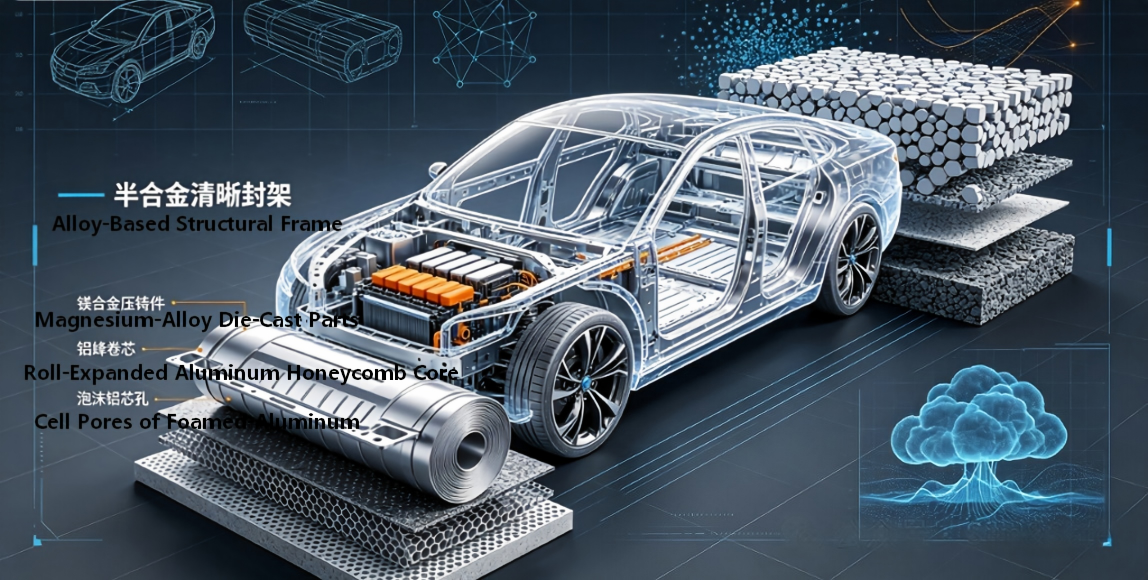
二、Functional Aluminum Materials: Battery honeycomb aluminum / foam aluminum 55g
Aluminum honeycomb (AL BATTERY honeycomb)
1.Conceptual attribute
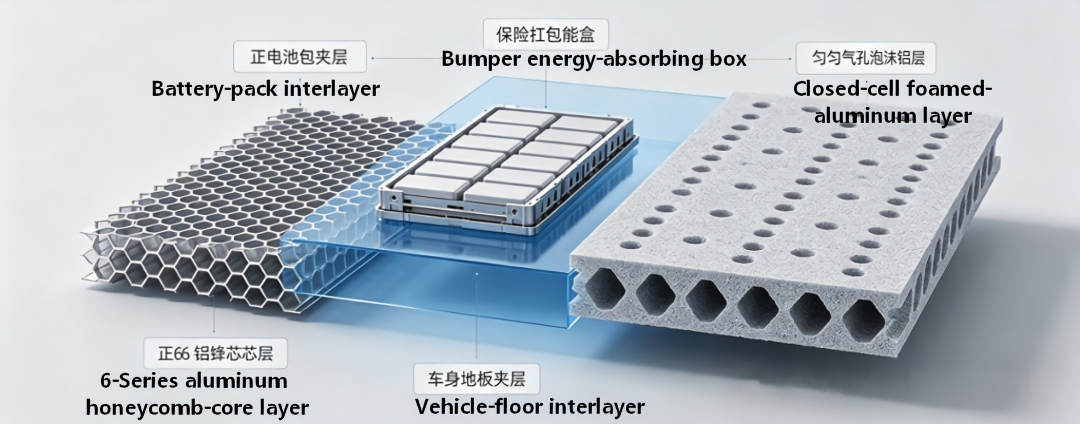
The aluminum honeycomb core is a hexagonal porous structure formed by bonding and stretching aluminum foil. The common base materials are 3003 and 5052 aluminum alloys, and it is classified according to the hole size, foil thickness, and density. The honeycomb used in batteries focuses on the stiffness and heat insulation/buffering within the plane.
Core performance
• Surface density: 30–80 kg/m³ (depending on the specification)
• Planar compressive strength: 1.5 – 4.0 MPa
• Flexural strength: Can reach 5-8 times that of solid aluminum sheets
• Energy absorption: Under impact conditions, it is over 300% higher than that of a solid plate. Energy is absorbed through progressive buckling of the cell walls and stabilization.
Technology / Process
Aluminum foil gluing → Lamination and hot pressing → Stretch forming → Immersion and curing with adhesive → Cutting. Battery-grade products need to undergo insulation coating treatment.
Automobile applications
Upper cover layer of the power battery pack: Enhances bending resistance and resilience against indentation
• Buffer pads between battery modules: Absorb vibrations and shocks, preventing cell compression
• Whole vehicle floor interlayer structure: integrates sound insulation, vibration reduction and lightweighting functions together
2. Foamed aluminum Al_Foam_55g
Conceptual attribute
55g refers to closed-cell aluminum foam with a volume density of approximately 0.55 g/cm³. It is a porous functional material with uniformly distributed air pores within an aluminum matrix. The common base materials are pure aluminum or Al-Si alloy.
Core performance
• Density: 0.55 g/cm³ (approximately 1/5 of solid aluminum)
• Compressive yield strength: 2 - 5 MPa
• Energy absorption: The platform maintains stable stress, making it an ideal material for absorbing impact energy.
• Sound insulation and noise reduction: The sound insulation performance for both mid-frequency and low-frequency ranges is superior to that of the same-weight solid aluminum sheet.
• Flame-retardant and heat-resistant: Melting point > 600℃, no toxic smoke emission
Preparation process
Melt foaming method (using TiH₂ foaming agent), infiltration casting method, powder metallurgy method; for automotive grade, closed-cell melt foaming method is the main one.
Automobile applications
• Impact energy absorption box filling: Combined with thin-walled aluminum tubes, the energy absorption during low-speed collisions has been increased by 40%
• Bottom protection of the battery pack: Resists stone strikes and punctures, and buffers external impacts
• Body B pillar /Rocker-Filling: During a side impact, it gradually collapses to absorb energy and protect the passenger compartment.
• Motor / Electric Drive Housing Vibration Isolation Layer: Reduces the transmission of structural noise
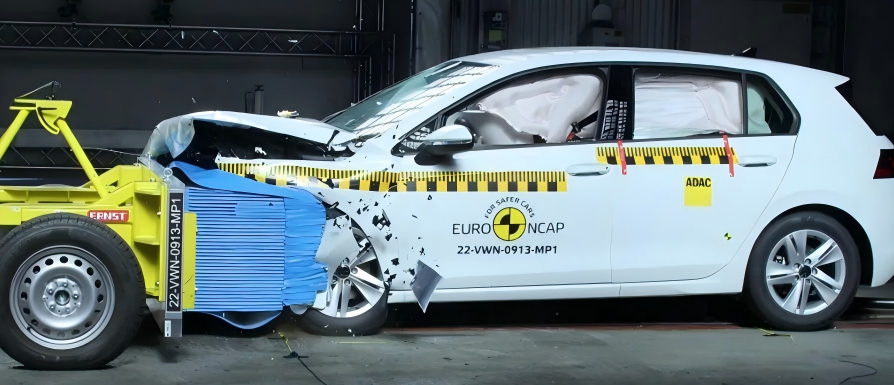
Test obstacle avoidance vehicle / collision dummy absorbing energy honeycomb (specific for the entire vehicle crash test laboratory)
Base material grade: The core layer aluminum foil base material mostly uses AW-3003 aluminum alloy (completely consistent with the 3xxx series 3003 in the text), rarely using 3103, 5 series; Reasons: 3003 manganese series anti-rust aluminum has good plasticity, stable welding / bonding, moderate cost, cell walls deform uniformly under low-speed impact, will not prematurely undergo brittle fracture, perfectly meeting the requirements of collision calibration. Density specification: The density of the test vehicle's crash honeycomb is much higher than that of the battery honeycomb: conventional 80–180 kg/m³, battery honeycomb is only 30–80 kg/m³; The obstacle avoidance dummy vehicle requires a higher platform compression strength to simulate the stiffness of the front end of a real vehicle.
Different from battery-based cellular systems
Battery honeycomb: Thin foil, low density, focusing on heat insulation + shock absorption and vibration reduction;
Collision Avoidance Honeycomb: Thickened aluminum foil, thick-walled honeycomb core, high-strength structural adhesive, with the core function of controlled progressive collapse for energy absorption, used for NCAP and AEB collision avoidance tests.
三、3xxx series aluminum alloys: 3003-H112 / 3103 / 3103-H12
Material concepts and component properties
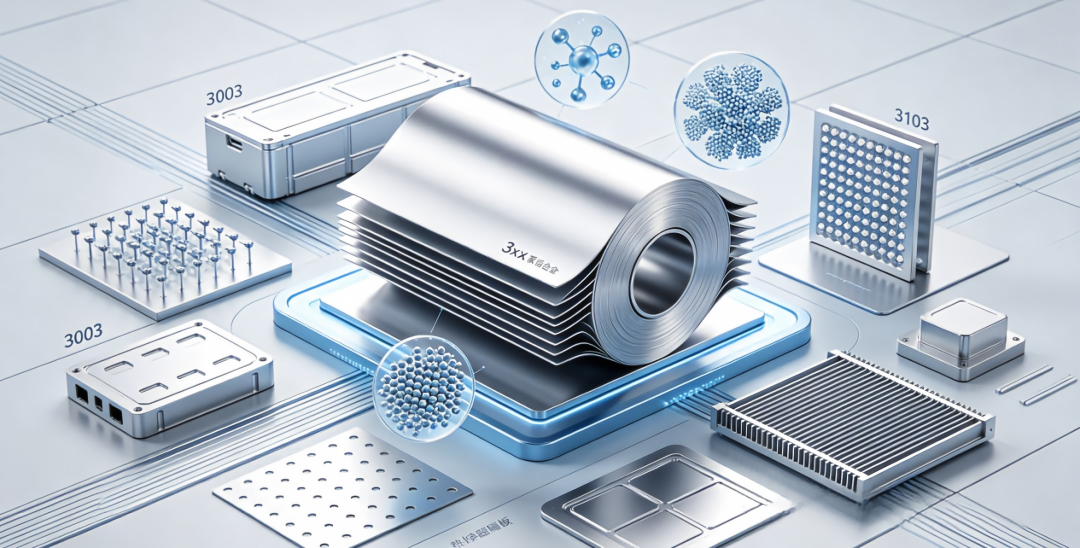
3xxx is a type of anti-rust aluminum alloy of the Al-Mn series. It cannot be strengthened through heat treatment. Its strength is enhanced by the solid solution strengthening of manganese and cold working hardening, and its corrosion resistance is similar to that of pure aluminum.
|
Grade |
Mn Content |
Fe+Si |
Cu |
Density |
|
AW-3003 |
1.0%–1.5% |
≤1.0% |
0.05%–0.2% |
2.73 g/cm³ |
|
AW-3103 |
0.9%–1.5% |
≤1.0% |
≤0.1% |
2.73 g/cm³ |
Condition Description
•H112: The material receives slight work‑hardening after hot working or light cold rolling on hot‑worked products. Its properties fall between the O‑temper and H14‑temper.
•H12: After work hardening, its strength reaches approximately one‑quarter of full‑hard •H18‑temper, striking a balance between strength and formability.
0.15: Nominal sheet thickness is 0.15 mm, classified as thin-foil grade.
2. Comparison of Mechanical Properties
|
Grade - Temper |
Ultimate Tensile Strength (UTS), MPa |
Yield Strength (YS), MPa |
Elongation after Fracture (A50), % |
Yield-to-Tensile Ratio |
|
3003-H112 |
115–140 |
70–90 |
≥15% |
0.61–0.64 |
|
3103-O |
80–110 |
35–60 |
≥25% |
0.44–0.55 |
|
3103-H12 |
120–145 |
90–110 |
≥12% |
0.75–0.76 |
|
3103-H14 |
140–170 |
115–140 |
≥8% |
0.82–0.83 |
3. Process Characteristics
• Formability: The O state has excellent deep drawing performance, enabling the manufacture of complex drawn parts; the H state is used for bending and rolling forming.
• Weldability: Excellent performance in argon arc welding, spot welding and seam welding. The weld strength can reach over 90% of the base material.
• Surface treatment: The anodic oxide coating layer is uniform. It can also be sprayed or electrophoretically coated.
• Corrosion resistance: Excellent corrosion resistance in air, fresh water, and food media; average corrosion resistance in seawater.
4. Industrial and Automotive Applications
• Battery housing: 3003 is the mainstream material for battery shells and covers. The plates, with a thickness of 0.8–1.5mm, are formed through stamping process, ensuring both corrosion resistance and weldability.
• Heat exchange system: Water tank, evaporator, condenser fins and partitions, a large amount of 3103 brazed composite plates are used
• Body decoration and sealing: Door trim, water channel, sealing gasket
• Foil material application: 0.15mm thick 3103-H12 foil is used for battery soft packaging and heat insulation shielding layer.
• Others: Fuel tank, piping, interior support structures, etc. (low-load structural components)
四、Full Spectrum of 5xxx Series Aluminum Alloys
Overview of the material system
5xxx series is an anti-rust aluminum alloy of the Al-Mg type. Magnesium is the main strengthening element. It cannot be strengthened through heat treatment. Its strength is enhanced through cold processing and alloying. The higher the magnesium content, the higher the strength, but the formability decreases. The 5 series used in automobiles are concentrated in the range of 2% - 5% magnesium content.
Status code description:
•ST-O: Standard Annealed, standard annealed state, with the best plasticity
•RSS-O: Recrystallized Solution Softened, Re-crystallized Solid Solution Softened State, The grain structure is more uniform, and the deep drawing performance is better.
•sheetforge: Specialized specifications for sheet forging and warm forming
2. Detailed Performance Descriptions of Each Brand/Model
(1) 5052 Aluminum Alloy (AlMg2.5)
• Composition: Mg 2.2% - 2.8%, Cr 0.15% - 0.35%, Mn ≤ 0.1%
• Mechanical properties (O state): Tensile strength 170–215 MPa, yield strength ≥ 65 MPa, elongation ≥ 16%, yield-to-strength ratio approximately 0.38–0.39
• Mechanical properties (H32 state): Tensile strength 230–280 MPa, yield strength 160–210 MPa, elongation ≥ 12%
• Characteristics: Medium strength, balanced fatigue resistance and corrosion resistance, good weldability, it is the most commonly used general grade among the 5 series.
(2) 5152 Internal Engine Cover Specialized (LOW / HIGH Grades)
• Composition: Mg 2.4% - 3.0%, Mn 0.15% - 0.4%, Cr 0.15% - 0.35%
•LOW grade: Low-strength high-forming version, with yield strength of approximately 80–100 MPa, suitable for internal panel areas with complex shapes
• HIGH grade: High-strength version, with a yield strength of approximately 120–150 MPa, suitable for applications such as hinge installation and lock reinforcement in areas with high loads.
• Application positioning: Specialized material for the inner bonnet of the car engine hood, balancing the forming properties during stamping and the anti-deformation stiffness. This is the traditional inner panel solution used by European automakers.
(3) 5182 Aluminum Alloy
• Composition: Mg 4.0% - 5.0%, Mn 0.2% - 0.5%
• Mechanical properties (O state): Tensile strength 275–350 MPa, yield strength 110–140 MPa, elongation ≥ 20%, yield-to-strength ratio approximately 0.40–0.42
• Core Advantage: The 5-series automotive sheet material has high strength and excellent deep drawing performance. A 0.9mm thin sheet can be used to form complex curved inner panels.
• Notes: High magnesium content is prone to cause Strecker-strain marks (stretch marks), which can be observed after painting. Therefore, it is only applicable for inner panels. Outer panels require 6-series alloy.
(4) 5754 Aluminum Alloy (AlMg3)
• Composition: Mg 2.6% - 3.6%, Mn 0.15% - 0.4%, Cr 0.05% - 0.2%
• Mechanical properties (O state): Tensile strength 190–240 MPa, yield strength ≥ 80 MPa, elongation ≥ 16%
• Mechanical properties (H32 state): Tensile strength 230–280 MPa, yield strength 160–210 MPa
• Characteristics: A balance between strength and formability, excellent corrosion resistance, capable of long-term use at certain temperatures, it is the main brand for body structural components and chassis parts.
3. Commonalities and Differences in Processes
• Press forming: The O state is suitable for deep drawing and stretching; the H state is suitable for bending and simple forming.
• Welding: Both MIG/TIG welding methods are acceptable, and the weld seam has good corrosion resistance; the strength loss in the heat affected zone of 5182 material is approximately 15% - 20%
• Wen Chengxing: Temperature stamping at 200 - 250℃ can significantly increase the elongation rate, suitable for extremely complex parts.
• Surface treatment: Can be subjected to anodizing, chemical conversion, or electrocoating; the oxide film of high-magnesium alloy has a darker color.
4. Panoramic View of Automobile Whole Vehicle Application
|
Grade |
Typical Applications |
Usable Thickness |
|
5052 |
Fuel tanks, fuel tubes, seat brackets, battery pack side panels |
1.0–3.0 mm |
|
5152 |
Hood inner panels, trunk lid inner panels |
0.8–1.2 mm |
|
5182 |
Door inner panels, fender inner panels, reinforcement beams |
0.8–1.2 mm |
|
5754 |
Floor cross members, rocker reinforcements, chassis sub frames, battery pack lower housings |
1.5–3.0 mm |
Industry wide rule: Due to Lüders lines, 5xxx series aluminum alloys are barely applied for exterior body panels. The outer panels mainly adopt 6xxx series grades such as 6016 and 6022. The combination of 5 series inner panels and 6 series outer panels has become the standard configuration for aluminum intensive car bodies globally.
5. Key Points for Simulation Applications
• Pressing simulation: In AutoForm / Dynaform, the * MAT_037 or Barlat yield model is used, taking into account anisotropy (r value), to predict wrinkling, cracking and springback.
• Collision simulation: In LS-DYNA, * MAT_024 + failure strain criterion, with a 5182 fracture strain of approximately 0.25–0.30
• Fatigue simulation: In nCode DesignLife, the SWT average stress correction method is adopted. The weld seams and riveting points are considered as the fatigue weak areas.
• Simulation connection: Abaqus simulates the forming process of SPR self-impacting riveting, and predicts the riveting cracks and interlocking values of the 5-series aluminum plate.
五、Typical Failure Issues in Material Production and Usage and Their Solutions
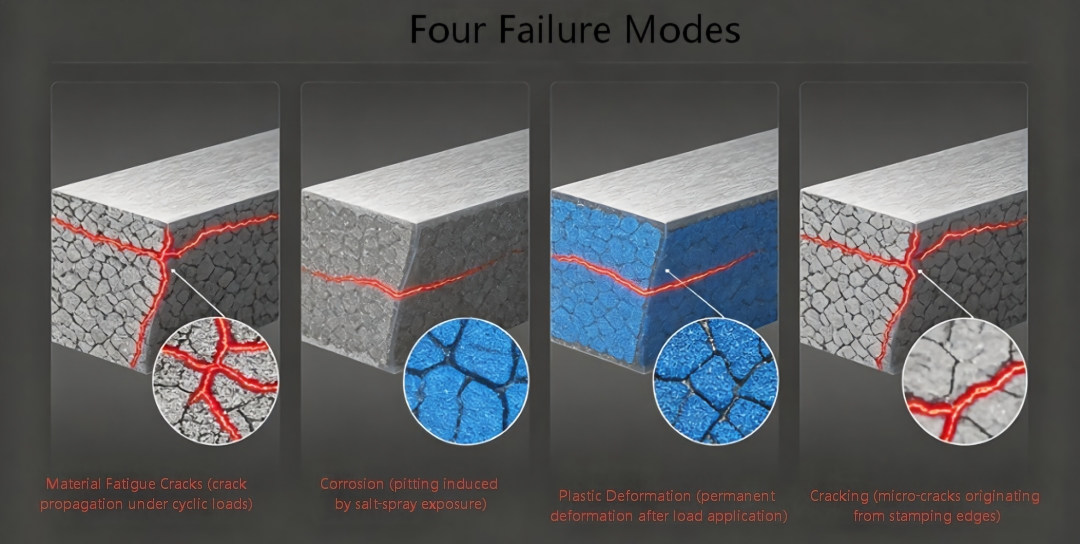
1.Material fatigue failure
Problem description: Under alternating loads (road surface excitation, vibration, switch component cycling), the material generates cracks at stress levels far below the yield strength and these cracks expand, eventually leading to fracture. Magnesium alloys are more sensitive to stress concentration and surface defects due to their low slip system in the close-packed hexagonal structure; the welds and riveted points of 5 series aluminum alloys are fatigue weak links.
Solution:
• Design side: Avoid sharp corners and abrupt changes in cross-section. The radius of the rounded corners should be ≥ 3 times the wall thickness; Reduce the stress concentration factor
• Process side: Improve surface smoothness by using shot blasting and rolling to introduce residual compressive stress; For magnesium alloy die-cast parts, control the porosity rate to be less than 1%.
• Material side: Preferentially select stabilized states such as H32/H34; 5754 has superior fatigue resistance compared to 5052.
• Verification end: Fatigue life simulation is conducted using nCode, with the target safety factor being ≥ 1.3; Platform tests are carried out to verify the key weld seams and connection points.
2. Material corrosion failure
Problem description: The standard electrode potential of magnesium alloy is extremely low (-2.37V). It is highly prone to electrochemical corrosion in humid and salt spray environments, and will cause severe electrochemical corrosion when in contact with steel, copper, etc. When the content of magnesium in 5 series aluminum alloy is high, there are tendencies for intergranular corrosion and stress corrosion cracking (SCC).
Solution:
• Magnesium alloy anti-corrosion:
○ Surface treatment: Micro-arc oxidation (MAO), chemical conversion coating, electrostatic spraying + multi-layer protection coating
○ Connection isolation: For connection to steel components, 6-series aluminum bolts or insulating washers are used to break the electrochemical couple circuit.
○ Environmental Isolation: Avoid direct contact with ethylene glycol coolant. The sealing ring is made of a material resistant to magnesium corrosion.
• Aluminum alloy anti-corrosion:
○5 The high-magnesium alloy should not be used for long-term service at temperatures ranging from 100 to 200 degrees Celsius, to prevent the β phase (Mg₂Al₃) from precipitating along grain boundaries, which could cause intergranular corrosion.
The vehicle body is protected by a three-layer system consisting of cathodic electrophoretic deposition (CED), sealant, and topcoat.
The inner side of the aluminum plate of the battery pack is coated with an insulating layer to prevent direct contact with the electrolyte and the copper bars.
3. Material plastic deformation failure
Problem description: During use, the components undergo plastic deformation beyond the design tolerance, resulting in functional failure (such as the car door sagging, the battery shell bulging, and the permanent deformation of the bracket). Materials with a high yield strength ratio (such as H-903103) have a small safety margin after yielding and are prone to sudden deformation.
Solution:
• Material selection optimization: For the deformation-sensitive parts, low yield strength materials are selected (for example, the O state 5182 has a yield strength ratio of only about 0.4, and there is still a considerable amount of work hardening remaining after yielding)
• Structural reinforcement: Adding ribs and flanges to increase the section's moment of inertia; avoiding excessive local loading
• Process control: The magnesium alloy castings eliminate residual stress and prevent the cumulative effect of creep deformation over long-term service.
• Simulation verification: Abaqus conducts plastic limit analysis to ensure no permanent deformation under 1.5 times the rated load.
4. Material cracking and failure
Problem Description:
• Formation cracks: The magnesium alloy has poor plasticity at room temperature, and edge cracks are prone to occur during rolling / stamping; cracks occur at the rounded corners during deep drawing of 5-series thin plates.
• Using cracking: Brittle fracture under impact load, or stress corrosion cracking (SCC) caused by the combined effect of corrosion and stress.
•Connection cracking: Interface cracks are prone to occur in magnesium-aluminum heterogeneous connections during self-tapping riveting and spot welding.
Solution:
• Forming end: Magnesium alloy is formed at a temperature of 250–350℃; For aluminum alloy, optimized clamping force and lubrication are adopted for deep drawing, and the safety margin of FLD (forming limit diagram) is controlled to be ≥ 10%
• Organization side: Refine the grains, control the size and distribution of the second phase, and reduce brittle intermetallic compounds
• Connection end: The magnesium-aluminum heterogeneous connection adopts a glue-bolt bonding process to avoid direct metallurgical bonding; the parameters of the SPR mold are optimized to reduce punching cracks.
• Usage end: Avoid overloading and corrosive environmental factors; Regular penetrant testing (PT) or ultrasonic testing (UT) should be conducted for key structural components.
5. Other typical issues
• Risk of magnesium alloy combustion: During cutting and die-casting processes, magnesium chips are highly flammable. Special cutting fluids and fire prevention measures must be adopted.
• 5 Series Luders Line: Before stamping, perform stretching straightening (with a stretching rate of 0.5% - 1%) or roller coating pretreatment to eliminate the yield plateau
• Aluminum honeycomb debonding: The surfaces of the panel and the core layer are thoroughly treated before bonding. In a humid and hot environment, structural epoxy adhesive is selected.
• Consistency of foamed aluminum: During production, the content of foaming agent and temperature are strictly controlled to ensure uniformity of pore size and density.
六、Expansion of Simulation Technology in Materials Engineering
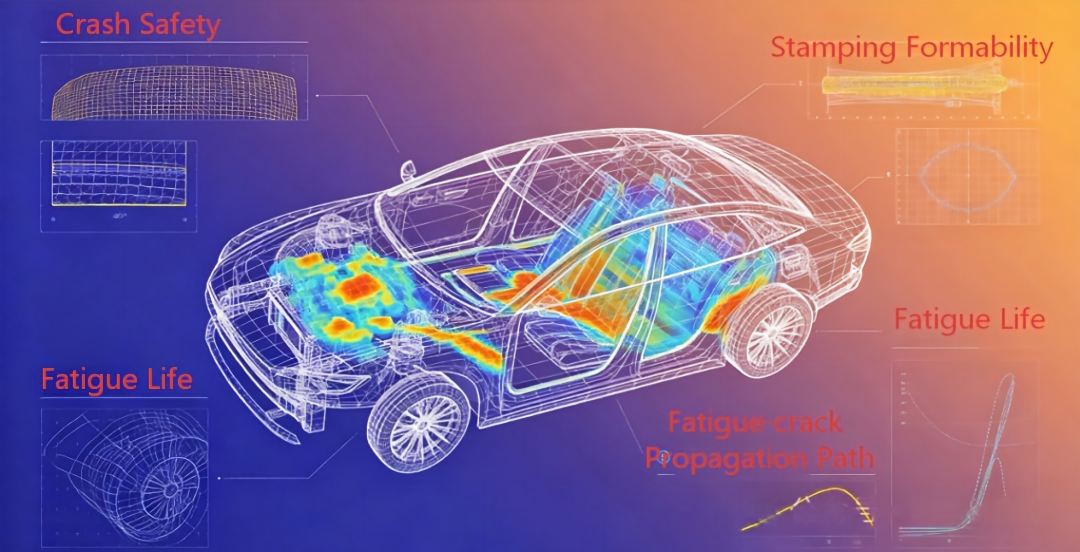
Collision safety simulation
• LS-DYNA: Whole vehicle collision, low-speed bumper, battery pack compression / puncture analysis
○ Magnesium alloy casting parts: *MAT_024 + GISSMO failure model, taking into account the reduction of failure strain due to porosity
○ Aluminum honeycomb / Foam aluminum: *MAT_026 (honeycomb), *MAT_075 (foam), stress calibrated through compression test platform
○5 Aluminum plate: *MAT_036 takes into account anisotropy. For the stamping - collision coupling analysis, the forming history is introduced.
2. Simulation of Strength and Stiffness
•Abaqus: Analysis of vehicle body bending and twisting stiffness, modal analysis, and installation point stiffness analysis
Different grades of aluminum plates are mapped according to their actual thickness and material parameters to accurately predict the overall stiffness contribution of the vehicle body.
○ Magnesium alloy die-cast parts take into account the casting residual stress and assess the long-term creep deformation trend
3. Fatigue Durability Simulation
• nCode DesignLife / fe-safe: Prediction of fatigue life for chassis components and vehicle connection points
The stress-life method (S-N) is applicable to high-cycle fatigue, while the strain-life method (ε-N) is applicable to the local plastic zone.
○ Corrosion fatigue combined factor: In the salt spray environment of magnesium alloys, the fatigue life is reduced by 30% - 50%, and an environmental correction factor needs to be introduced.
4. Process Simulation
• Casting Simulation (MAGMA): Optimizes the gating and cooling system for magnesium alloy casting, reducing the risks of porosity and thermal cracking.
• Pressing simulation (AutoForm): Compensation for the rebound of 5-series aluminum plates, the pass rate of the first mold trial has increased to over 85%
• Simulation connection (Abaqus/DEFORM): Optimization of process parameters for SPR self-tapping riveting and FDS hot-melt self-tapping screws
|
Material Categories |
Density g/cm³ |
Typical Yield Strength, MPa |
Core advantage |
Preferred automotive scenario |
Main Risks |
|
AM50 Magnesium Alloy |
1.77 |
130–150 |
Lightest, highly plastic, good vibration damping |
Dashboard crossbeam, energy absorption structure |
Corrosion, Cost, Difficult Forming |
|
AM60 Magnesium Alloy |
1.78 |
130–160 |
Strong plasticity balance |
Steering wheel, seat frame |
Corrosion, Welding Difficulties |
|
3003/3103 Aluminum |
2.73 |
70–110 |
Good corrosion resistance, low cost, easy welding |
Battery case, heat exchanger |
Low Strength, Easily Deformed |
|
5052 Aluminum |
2.68 |
65–200 |
General balance, anti-fatigue |
Fuel tank, bracket, side panel |
Medium Strength |
|
5182 Aluminum |
2.68 |
110–255 |
High strength and high formability |
Door / hood inner panel |
Luders Line, In-Plane Plate |
|
5754 Aluminum |
2.68 |
80–210 |
Strong plasticity balance, good temperature resistance |
Structural components, chassis, battery case |
Cost Higher than 5052 |
|
Aluminum Honeycomb / Foam Aluminum |
0.05–0.6 |
2–4 |
Ultra-light, energy absorption, sound insulation |
Buffer, energy absorption, interlayer |
In-Plane Shear Weakness, High Cost |
Selection principles:
For extreme weight reduction, magnesium alloys are the preferred choice, but a comprehensive anti-corrosion plan must also be provided.
2. Internal covering parts take priority: 5182/5152; Structural parts take priority: 5754; Low-cost general-purpose parts are selected: 5052
3. The battery system adopts the classic combination of 3003 housing + honeycomb cushioning + foam energy absorption.
4. The selection of all materials must be accompanied by simultaneous completion of simulation verification in four major aspects: collision, stiffness, fatigue, and corrosion.
Melt foaming method (using TiH₂ foaming agent), infiltration casting method, powder metallurgy method; for automotive grade, closed-cell melt foaming method is the main one.


